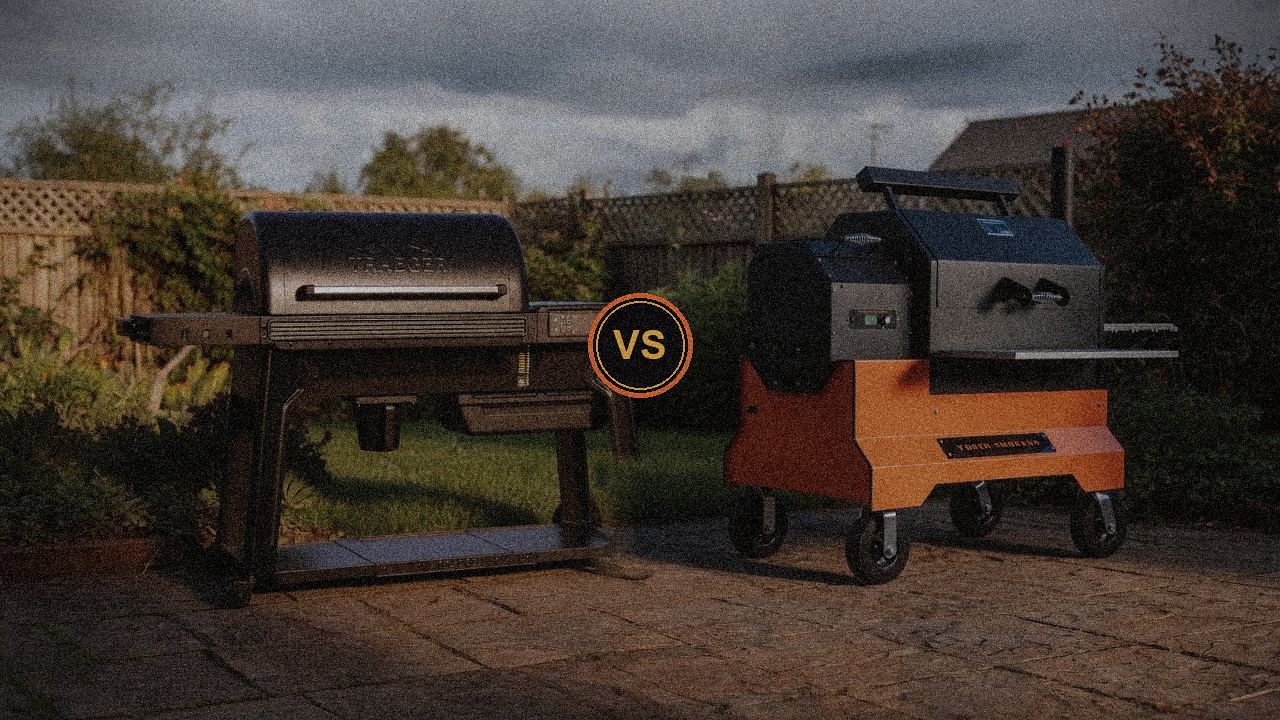
Traeger vs Yoder: The Marketing Giant Against the Steel Purist, Cooked Side by Side
Traeger's Woodridge and Ironwood lines vs the Yoder YS640s and YS480s: warranty math, price per square inch, smoke, build, and app from real cooks. Who wins, and when the Yoder is still the right buy.
 By Oleg Galeev, cooking on pellet grills since 2020, runs the OleGrill YouTube channel
Short answer
Traeger wins for most backyards: a lineup from the $900 Woodridge to the Timberline XL, the best app in the category, stock on every hardware shelf, and a 10-year warranty on the Woodridge line. Buy a Yoder YS480s or YS640s, $2,249 to $2,699, when the grill is a 15-year decision built from heavy American steel.
Live prices. Affiliate links: we may earn a commission at no extra cost to you. How this works.
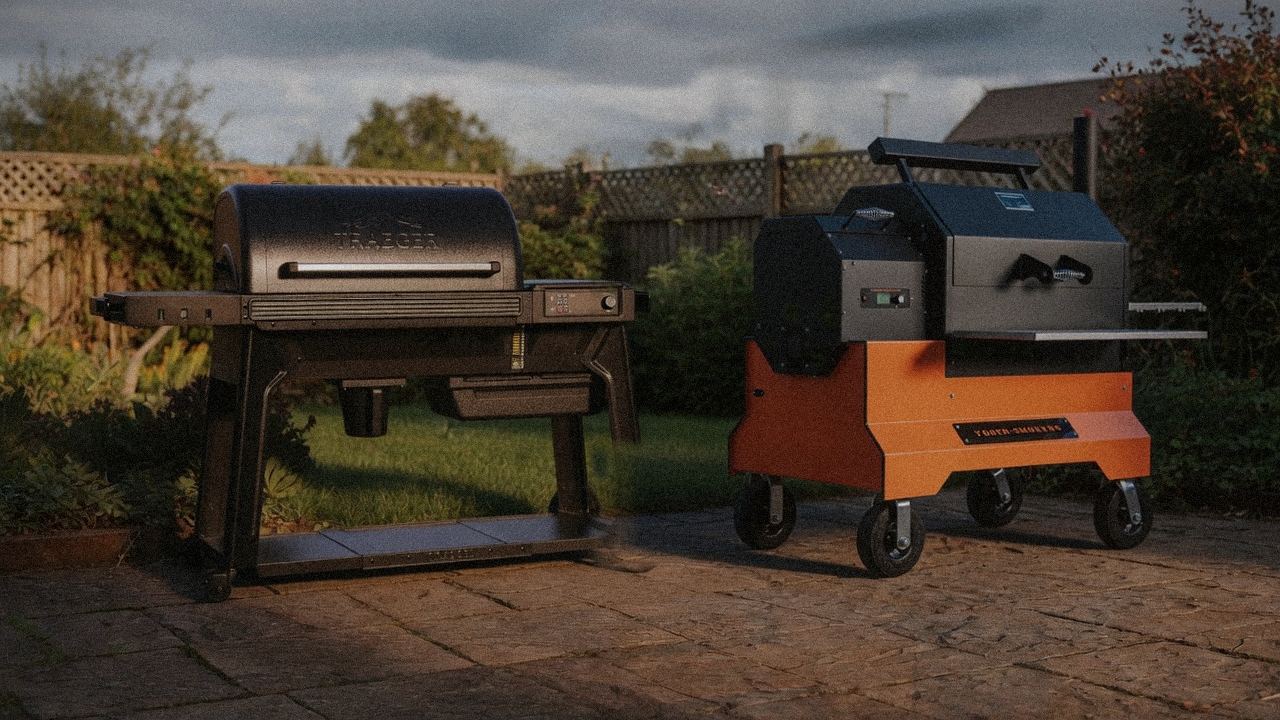
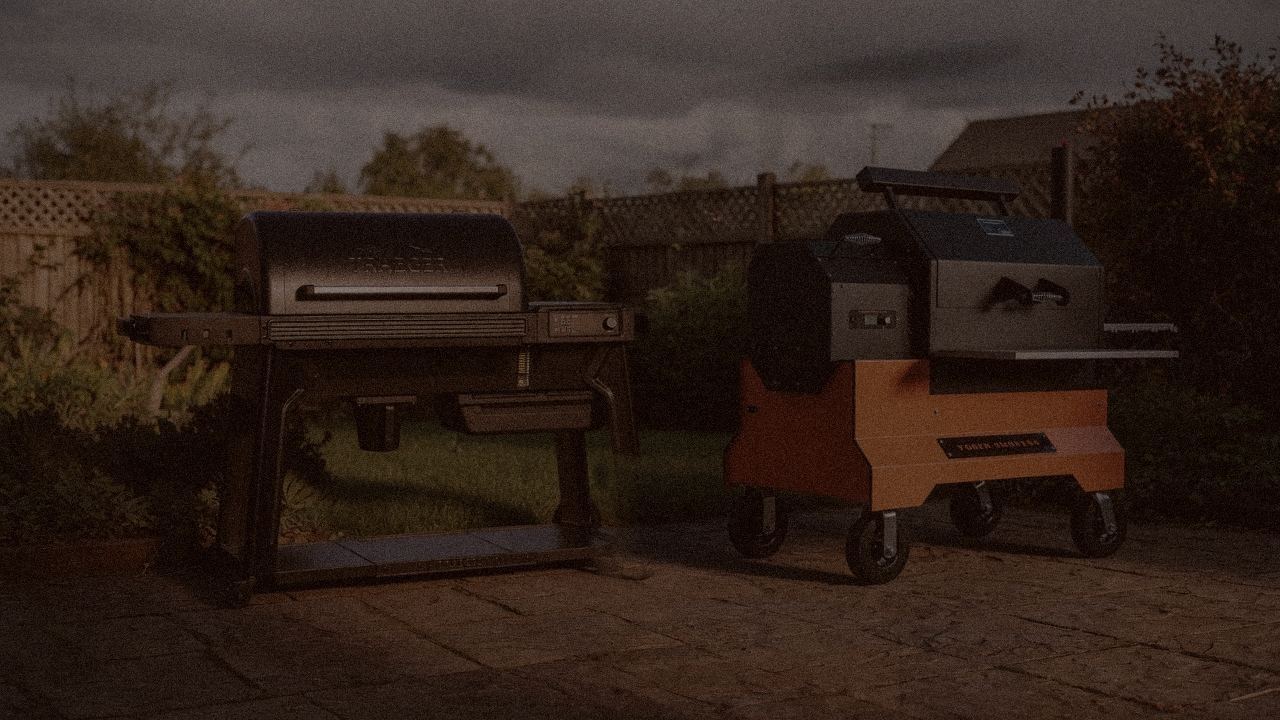
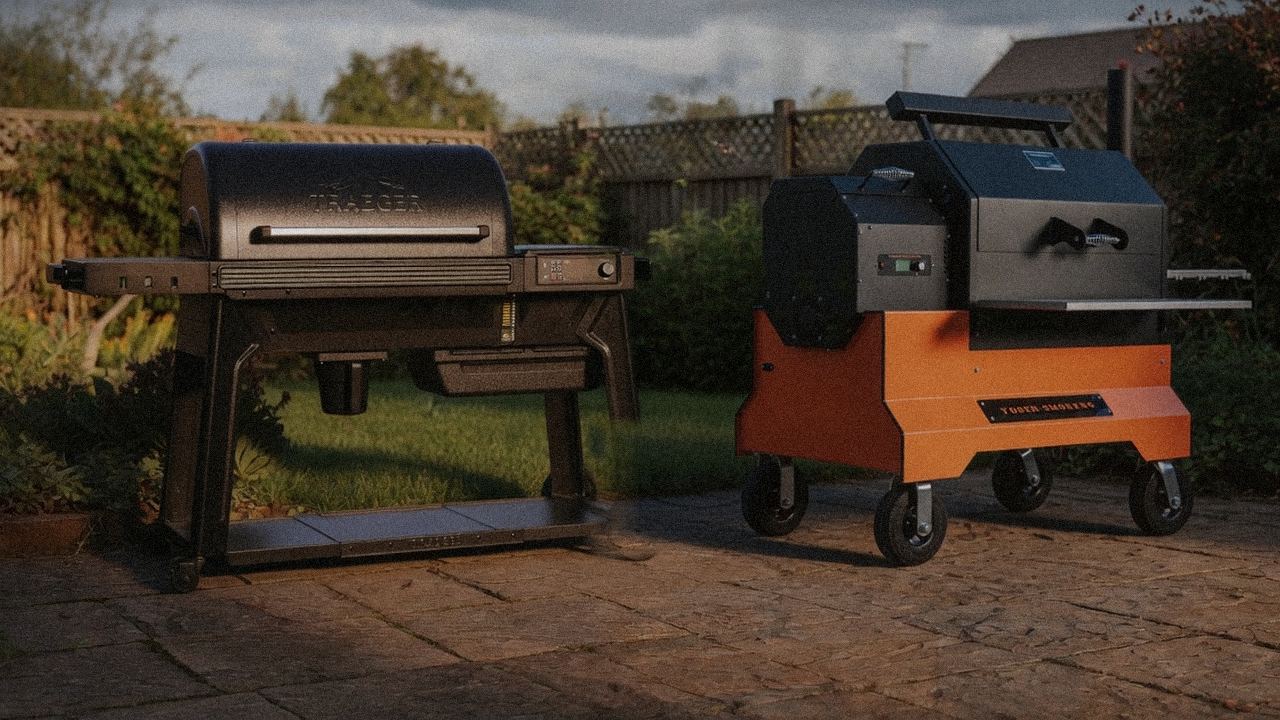
The Traeger Woodridge Pro came off the delivery truck in a box I walked up the driveway on a hand cart. The Yoder YS640s arrived on a freight pallet, and the driver stayed to watch me wrestle it down the ramp. That's the whole matchup in one afternoon: one company sells you convenience at enormous scale, the other sells you steel and dares you to move it. I've cooked on both sides through a full season, and the honest answer about which belongs on your deck depends on which of those two things you're really shopping for. It is one of the matchups behind the best wood pellet grills rankings on this site.
Pull temps still follow the USDA safe minimum internal temperatures for poultry, pork, and ground beef, no matter which hopper you bought.
Warranty language is what Traeger's warranty page actually publishes, not a forum guess.
Traeger vs Yoder at a glance
Traeger covers every budget: the Woodridge starts at $900 and the Woodridge Pro runs $1,178, both with a 10-year warranty. Yoder sells two pellet pits, the $2,249 YS480s and the $2,699 YS640s, also with 10-year warranties, plus direct-flame searing and the only perfect build score we've recorded.
| Spec | Traeger Woodridge Pro | Traeger Ironwood XL | Yoder YS640s | Yoder YS480s |
|---|---|---|---|---|
| Price | $1,178 | - | $2,699 | $2,249 |
| Cooking area | 970 sq in | 924 sq in | 1,070 sq in | 800 sq in |
| Hopper | 24 lb | - | 20 lb | 20 lb |
| Max temp | 500°F | 500°F | - | - |
| WiFi | Yes | Yes | Yes | Yes |
| Direct sear | No | No | Yes | Yes |
| Warranty | 10 years | 10 years | 10 years | 10 years |
Breadth is Traeger's first win and it shows up before you cook anything. This data set alone holds ten current Traeger models, from the 300 sq in Tailgater 20 at 450°F up to the 1,320 sq in Timberline XL. Yoder makes two pellet pits, built one way, and if that way doesn't fit your budget there is no cheaper Yoder to fall back on. The two YS models share the same guts and identical test scores, so from here on "the Yoder" means either one.
Which holds temperature better?
The Yoder, on paper, with a 9 for temp accuracy and a 9 for stability in our testing. The Traeger models in this pairing haven't been scored on that same weighted scale yet, so I can't print a number against it. From my cooks, the Woodridge line holds a setpoint well; the Yoder holds it stubbornly.
| Test dimension | Yoder YS640s / YS480s | Traeger models in this pairing |
|---|---|---|
| Temp accuracy | 9 | - |
| Temp stability | 9 | - |
| Smoke | 8.5 | - |
| Build | 10 | - |
| Sear | 9 | - |
| Overall score | 8.5 | - |
I want to be plain about what's measured and what isn't. The Yoder YS-series carries full dimension scores from testing. For the Traegers we have verified specs, a 500°F ceiling across the Woodridge, Ironwood, and Timberline lines, plus my own bench time, but no weighted score to set beside the Yoder's 9s. First-hand, a Woodridge Pro rides through a windy afternoon without drama, and the Yoder's sheer thermal mass barely notices a lid lift.
One honest wrinkle on the Yoder side: some tests note a slight left-to-right gradient across the grates. You learn your hot side in two cooks and place the brisket point accordingly. It shows up in the recteq vs Yoder matchup too, where the Yoder's stability scores tie a grill costing $1,100 less.
Who makes more smoke?
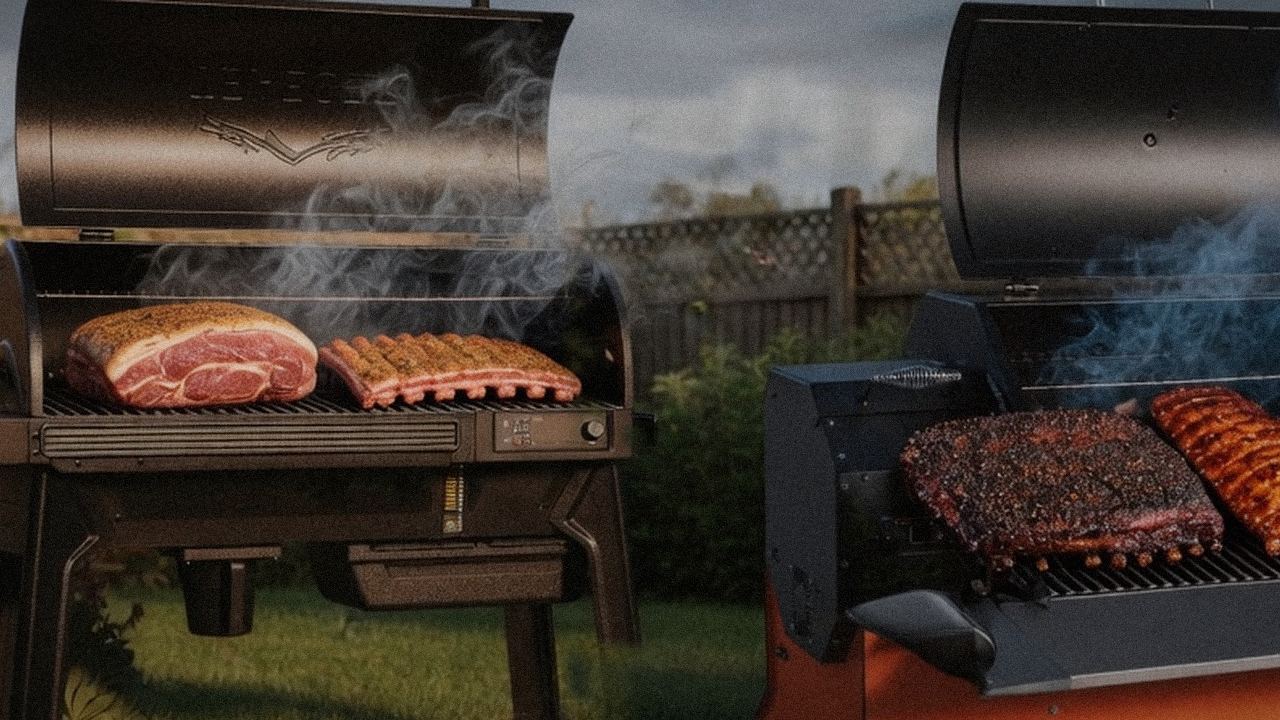
The Yoder has the measured edge: an 8.5 smoke score, with bark depth to match on long cooks. Traeger's newer lines produce clean, mild smoke, and the one recurring gripe in Woodridge Pro owner threads is exactly that: occasional Reddit reports of less smoke flavor than expected.
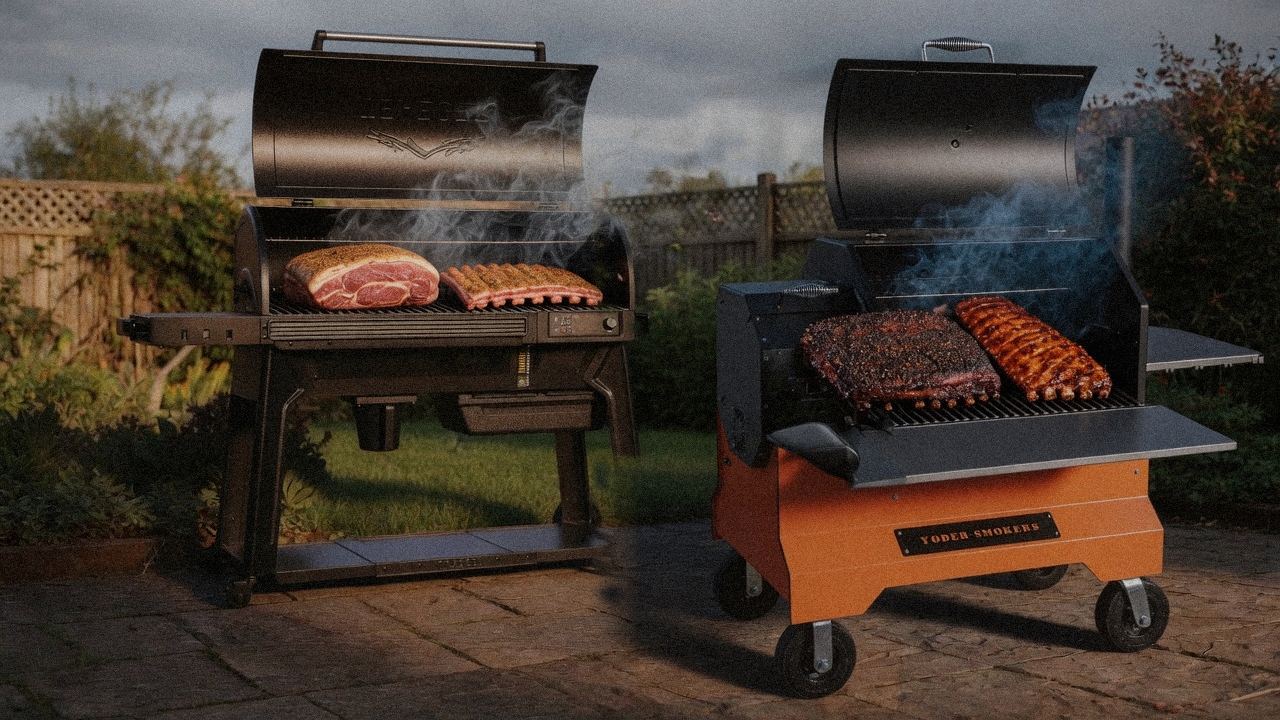
A pellet grill is a controlled-combustion machine before it is anything else, so no pit here out-smokes a stick burner. Within that lane, the Yoder's heavier fire reads richer on a packer brisket, and the 8.5 score gives that impression something more repeatable than my palate. On ribs and chicken the gap narrows to almost nothing.
The Woodridge Pro complaint deserves context rather than dismissal. It's an occasional report, not a chorus, and it tracks with Traeger tuning its burn clean for a mass audience. If maximum smoke is your entire purchase criterion, the Yoder is the safer bet of these two. The tradeoff is fuel: Yoder efficiency scored just 7, and owners consistently report high pellet consumption on long cooks.
Which is built to last?
The Yoder, without hesitation. It scored a perfect 10 for build, the only one in our testing, on thick-gauge American steel from a company with real competition pedigree. Traeger's answer is a 10-year warranty across the Woodridge line, remarkable on a $900 grill, though the machines themselves are lighter-built.
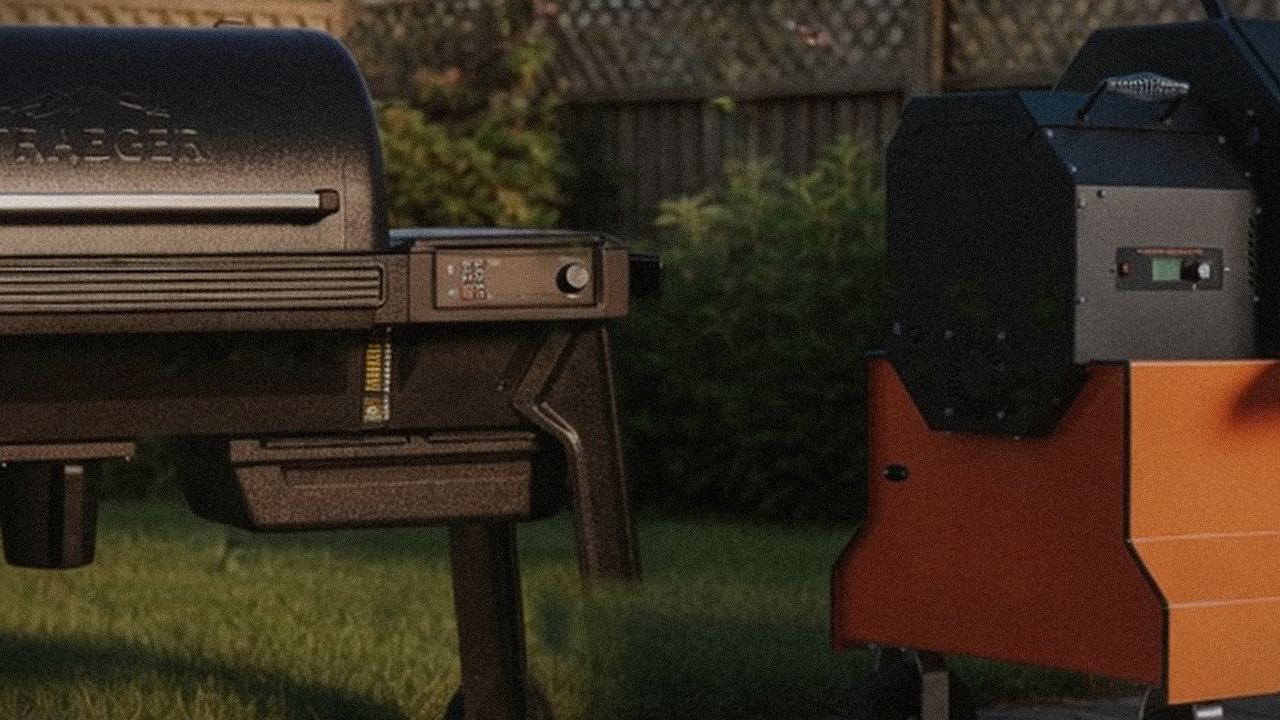
This is the steel purist's whole argument and it's a good one. Yoder pits come out of Kansas welded like farm equipment, the same construction the brand hauls onto the competition circuit, and the 10-year warranty reads less like a promise and more like a shrug: of course it lasts. The realistic wear items owners report are surface-level, rust on door and lid edges over time and on paint and grates in humid or coastal areas, plus igniter and electronics failures from a minority of owners. The steel outlives its own wiring.
Traeger's counterpunch is the warranty itself. Ten years on the Woodridge, Woodridge Pro, Woodridge Elite, Ironwood XL, Timberline, and Timberline XL is verified in our data, and matching Yoder's coverage at a third of the price changes the durability math for a normal backyard. I dig into the build gap from the other premium angle in Weber vs Yoder.
Which app is livable, and what do owners complain about?
Traeger wins the software fight. WiFIRE is the most polished app in the category, and it runs on nearly every current Traeger. Yoder's app scored a respectable 8, but the wider ecosystem, availability, and accessory shelf all favor Traeger. Owner complaints split cleanly: smoke gripes for Traeger, rust and electronics for Yoder.
Availability is the quiet part of this section. A Traeger is on the shelf at practically every hardware and big-box store in the country, with pellets and parts two aisles over. A Yoder comes through a dealer network or freight shipping, and that's also who you call for service. Neither route is bad. One is simply frictionless.
What does the value math actually say?
Per square inch, it's a rout. The Traeger Woodridge costs $1.05 per square inch and the Woodridge Pro $1.21, against $2.52 for the Yoder YS640s and $2.81 for the YS480s. Per covered warranty year, a Woodridge costs $90 while a YS640s costs $270.
| Model | Price | Cooking area | $ per sq in | $ per warranty year |
|---|---|---|---|---|
| Traeger Woodridge | $900 | 860 sq in | $1.05 | $90 |
| Traeger Woodridge Pro | $1,178 | 970 sq in | $1.21 | $118 |
| Traeger Woodridge Elite | $1,800 | 970 sq in | $1.86 | $180 |
| Yoder YS480s | $2,249 | 800 sq in | $2.81 | $225 |
| Yoder YS640s | $2,699 | 1,070 sq in | $2.52 | $270 |
Read that table coldly and the Woodridge Pro embarrasses the YS480s: 170 more square inches, a bigger 24 lb hopper, the same 10-year warranty, for $1,071 less. What the table cannot price is a perfect build score, direct-flame searing, and the Yoder's 8.5 overall test score. The Traegers in this pairing carry no weighted overall score in this data set, so the fair statement is that the Yoder is excellent and expensive, and the spreadsheet alone will never talk you into one.
Which one should a first-timer buy?
The Traeger, and it isn't close. A $900 Woodridge with WiFi, a 24 lb hopper, and a decade of warranty is the gentlest possible entry into pellet cooking, and the app holds your hand through the first brisket. A first Yoder is a wonderful overbuy, but it teaches the same lessons for $1,300 more.
There's a version of this buyer who should still go Yoder: the person who knows they'll cook forty weekends a year and hates buying anything twice. Everyone else learns faster on the Traeger and keeps enough cash back for a year of pellets and meat. Worth knowing before you commit to either brand: our overall top pick sits outside this matchup entirely. The Weber Searwood XL leads our full pellet grill rankings, and you can check the current price if you'd rather have the tested #1 than either side of this fight. And if you're weighing Traeger against the budget field instead of the premium one, Traeger vs Pit Boss covers that fork.
Who should spend the extra $1,500?
Somebody buying their last grill, not their next one. The jump from a Woodridge Pro to a YS640s buys a perfect-10 build, true direct-flame searing, and a pit with a serious shot at outliving its 10-year paper. If you replace grills every five or six years anyway, that money is better spent on meat.
The Yoder makes sense as a 15-year decision. Heavy steel doesn't fatigue the way light stock does, the wear items owners actually report are cosmetic rust and replaceable electronics, and the searing hardware means you may never need a second grill for steaks. If you're reading spec sheets at midnight and the word "gauge" keeps you there, you already know which one you are.
Verdict: marketing giant or steel purist?
Traeger for most backyards. The lineup breadth, the app, walk-in availability, and a 10-year warranty from $900 make it the rational pick, which is why the Ironwood XL sits in our tested rankings. The Yoder YS640s and YS480s are the better-built machines, scored 8.5 overall, for people making a 15-year buy.
I'd send eight of ten shoppers to Traeger and I'd do it without guilt: the Woodridge line in particular is the strongest warranty-per-dollar story in this data. The two I'd send to Yoder are the ones who winced at the phrase "marketing giant." They want the pit the competition guys tow, they'll oil the door edges before the coastal air gets to them, and they'll still be cooking on it when the rest of us are unboxing our next grill.
Is Yoder better than Traeger?
Yoder is better built: a perfect 10 build score, direct-flame searing, and heavy American steel with a 10-year warranty at $2,249 to $2,699. Traeger is the better buy for most people, with models from $900, a 10-year warranty on the Woodridge line, the category's best app, and stock everywhere.
Is a Yoder YS640s worth the money?
At $2,699 it costs $2.52 per square inch against $1.21 for a Traeger Woodridge Pro, so on spreadsheet value, no. It earns the price through an 8.5 overall test score, a perfect build rating, and real direct-flame searing. It's worth it as a long-term buy, not a bargain.
Do Yoder pellet grills rust?
On the surface, yes. Owners report rust on door and lid edges after extended use, and on paint, coating, and grates in humid or coastal areas, on both the YS640s and YS480s. It's cosmetic wear on thick steel rather than structural failure; a cover and occasional touch-up keep it in check.
Which Traeger is closest to a Yoder YS640s?
The Ironwood XL is the nearest match in spirit: 924 square inches against the Yoder's 1,070, WiFi, and a 10-year warranty. Neither the Ironwood XL nor any current Traeger offers the Yoder's direct-flame searing, and none matches its perfect build score. The Yoder answers back with high pellet use and freight-only delivery.
How long do Traeger and Yoder grills last?
Both brands back their flagships for 10 years: Traeger across the Woodridge, Ironwood XL, and Timberline lines, Yoder on the YS480s and YS640s. The Yoder's heavier steel gives it the longer realistic service life; the failures owners report are igniters and electronics, not the body of the pit.