Traeger vs Pit Boss: I Cook on Both Brands, Here Is Who Wins What
Traeger vs Pit Boss after years of running both brands side by side: who wins on price per square inch, direct-flame searing, controllers, warranty, and which one most buyers should actually get.
 By Oleg Galeev, cooking on pellet grills since 2020, runs the OleGrill YouTube channel
Short answer
Traeger wins for most buyers, by a nose: cleaner controller behavior, the best app in the category, a 10 year warranty, and stronger resale. Pit Boss wins price per square inch and puts a direct-flame broiler slide on every current model, which makes it the smart pick for value-first buyers who sear a lot.
Live prices. Affiliate links: we may earn a commission at no extra cost to you. How this works.
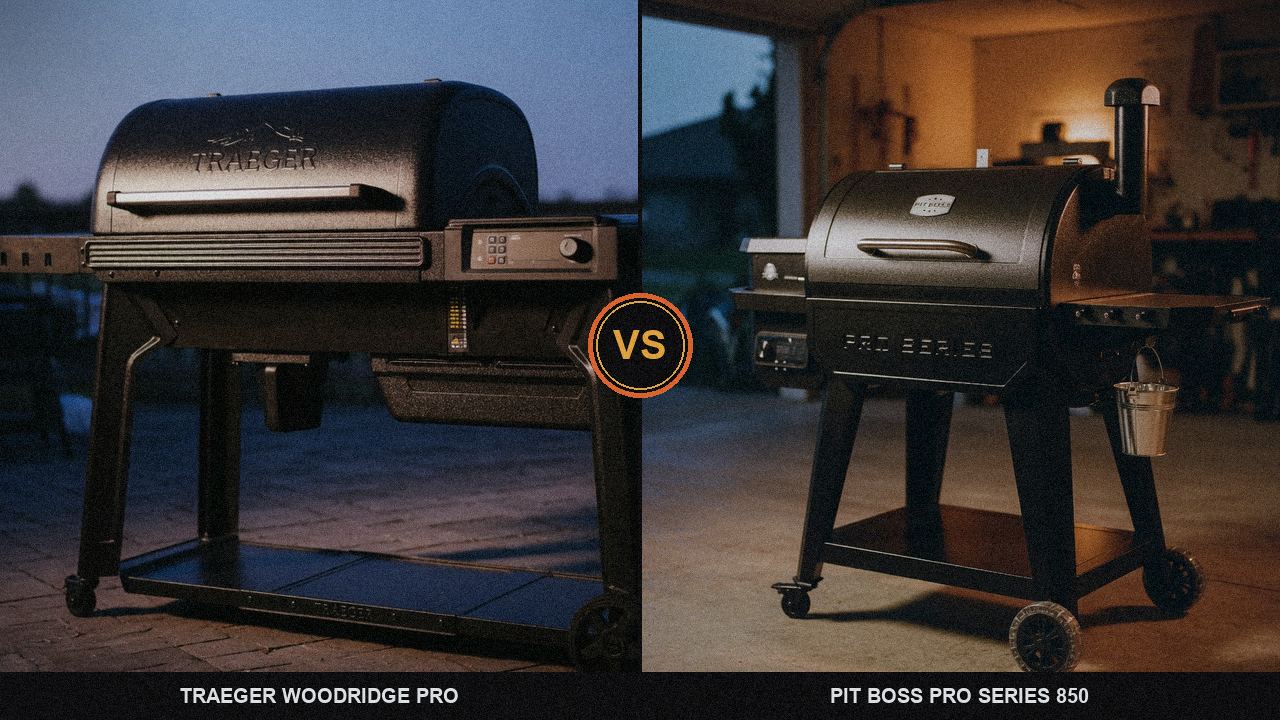
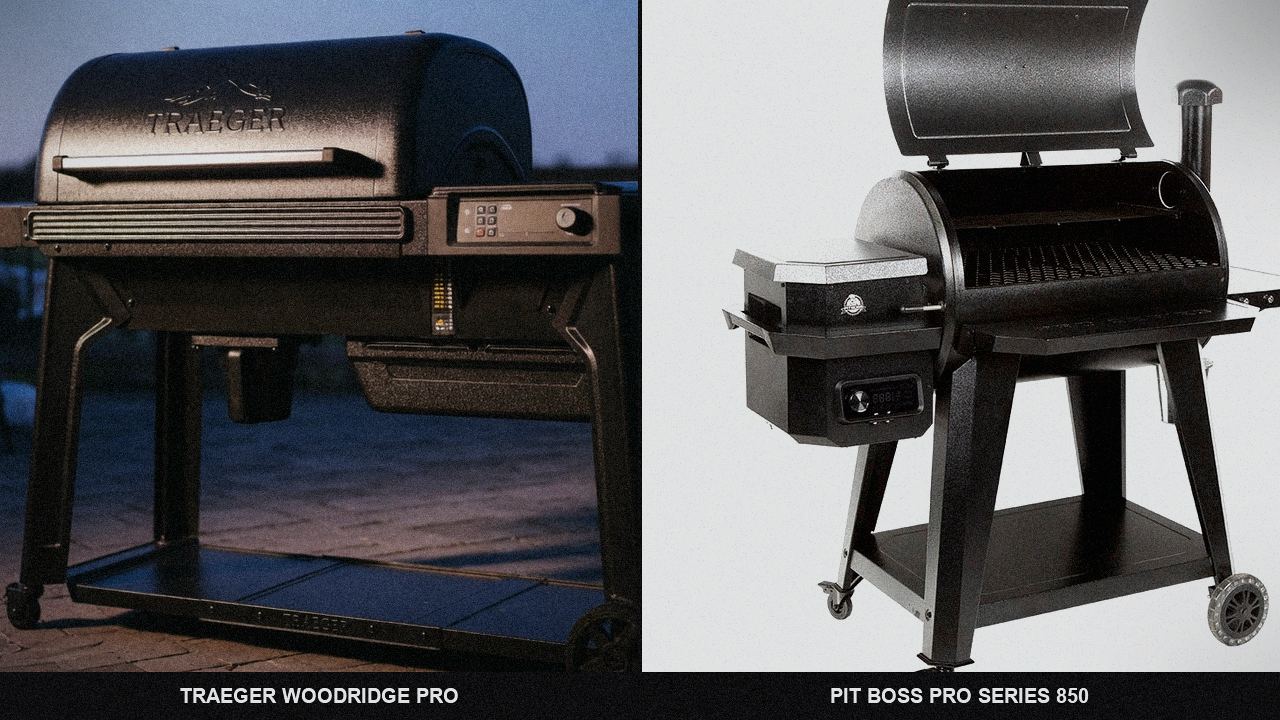
Two grills, one bag of the same hickory pellets, a Saturday I lost to science. The Traeger Woodridge Pro sat on the left of my patio, a Pit Boss Pro Series 850 on the right, both loaded with identical racks of spare ribs. By hour two the differences were already showing: the Traeger hummed along like an appliance, the Pit Boss demanded a little more attention and gave back a harder sear when I flipped its flame broiler open for the last stretch. I have been running both brands since 2020 for the OleGrill channel, and this matchup is the one people ask me about more than any other. It deserves a straight answer, not a shrug. It is one of the matchups behind the best wood pellet grills rankings on this site.
Pull temps still follow the USDA safe minimum internal temperatures for poultry, pork, and ground beef, no matter which hopper you bought.
Warranty language is what Traeger's warranty page actually publishes, not a forum guess.
Is Pit Boss just as good as Traeger?
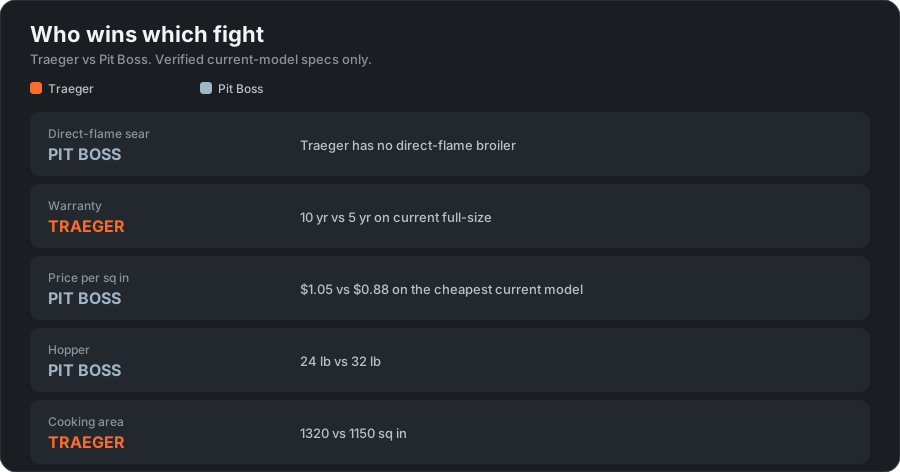
Close, but not quite, and the gap depends on what you cook. Pit Boss matches Traeger on max temperature and beats it on price per square inch and direct-flame searing. Traeger pulls ahead on controller refinement, its app, support, and resale value. Overall winner for most buyers: Traeger, by a nose.
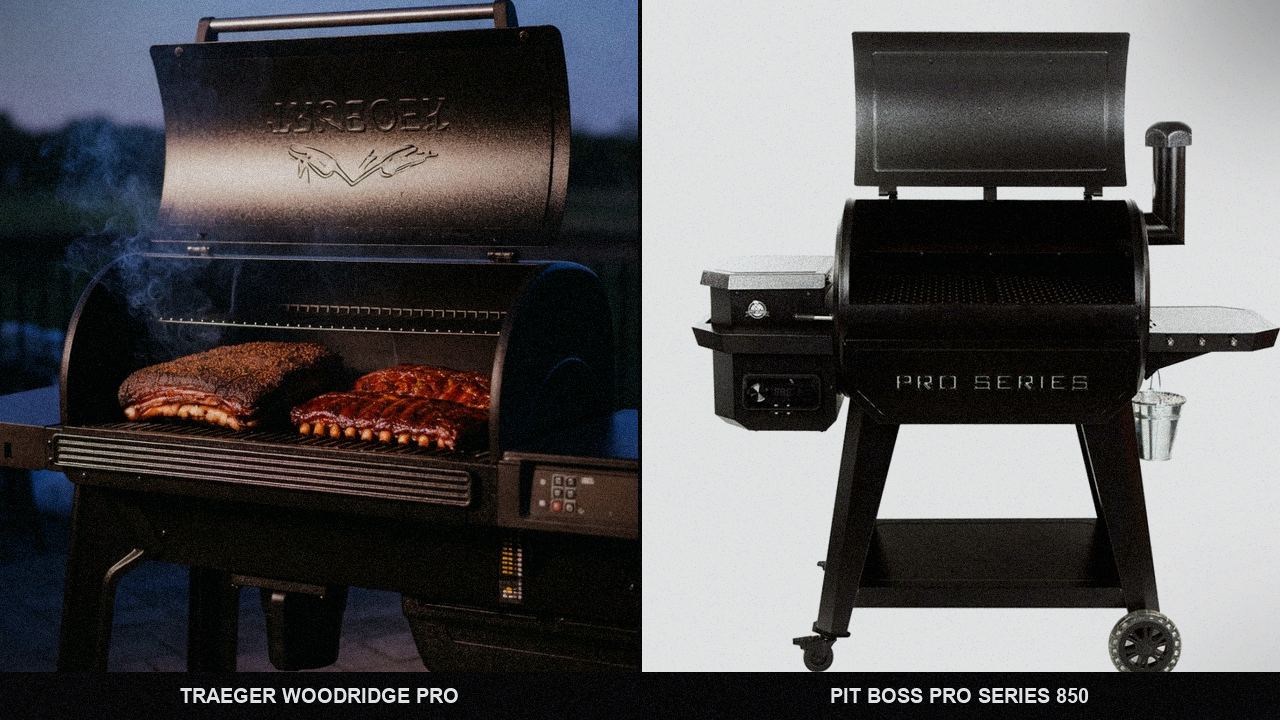
Both brands build the same basic machine: a hopper feeds wood pellets into a fire pot, a fan drives the burn, and a controller holds your set temperature. The pellet grill concept does not change between badges. What changes is execution, and that is where the two companies split.
Traeger spends its money on the brain. The current Woodridge and Timberline lines all ship with WiFi, and the app experience is the one I actually leave open on my phone during a long cook. Pit Boss spends its money on steel and grate space. Every current Pit Boss in my registry, from the $749 Sportsman up through the Pro Series 1150, includes a slide-open flame broiler for direct searing. Not a single current Traeger offers that.
So "just as good" is the wrong frame. They are good at different things. If your cooking is 90 percent low and slow with an occasional burger, the Traeger polish is worth paying for. If you finish half your cooks over open flame, Pit Boss hands you a feature Traeger simply does not sell, and charges you less for the grill underneath it. The rest of this page is me putting numbers on that split.
How do the flagship models compare on paper?
On paper the Traeger Woodridge Pro brings 970 square inches, a 24 pound hopper, WiFi, and a 10 year warranty for $1,149.99 on Traeger's own site. Pit Boss answers with similar space, bigger hoppers on the 1150, direct-flame searing on every model, and a 5 year warranty. Both brands top out at 500°F on the dial.
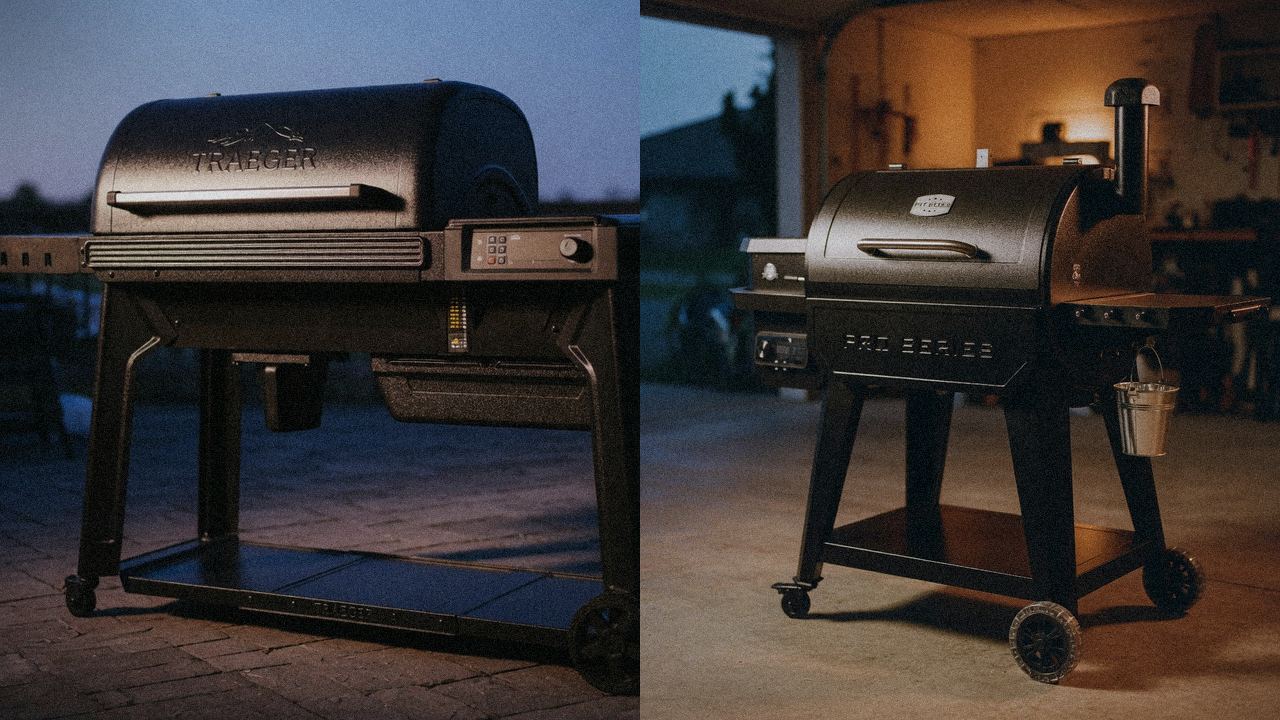
Here are the representative current models from each side, from manufacturer pages checked 2026-08-24. A dash means I do not have a verified number for that cell.
| Spec | Traeger Woodridge Pro | Pit Boss Pro Series II 850 | Pit Boss Sportsman |
|---|---|---|---|
| Price | $1,149.99 | Lowe's exclusive | $749.99 |
| Cooking area | 970 sq in | 850 sq in | 849 sq in |
| Hopper | 24 lb | 20 lb | 21 lb |
| Max temp | 500°F | 500°F | 500°F |
| WiFi | Yes | Yes | Yes |
| Direct-flame sear | No | Yes (claimed to 1,000°F) | Yes |
| Warranty | 10 years | 5 years | 5 years |
Read that table twice and the whole rivalry is in it. Traeger gives you double the warranty and a slightly bigger cooking deck on the Woodridge Pro. Pit Boss gives you the flame broiler and, on the Sportsman, a price that undercuts every current Traeger I track: the base Woodridge is $899.99, the Woodridge Pro Plus (new, December 2025) is $1,399.99, and the Woodridge Elite is $1,799.99. If you want to see how these two stack against the rest of the field, my full pellet grill rankings cover every model on this page.
Which brand holds temperature better?
Traeger, in my cooks. The Woodridge and Timberline controllers recover smoothly after lid opens and rarely wander far from set point. Pit Boss controllers are decent on the current Pro Series but the brand's history includes real complaints: owners of the now-discontinued Competition Series 1250 reported huge temp swings.
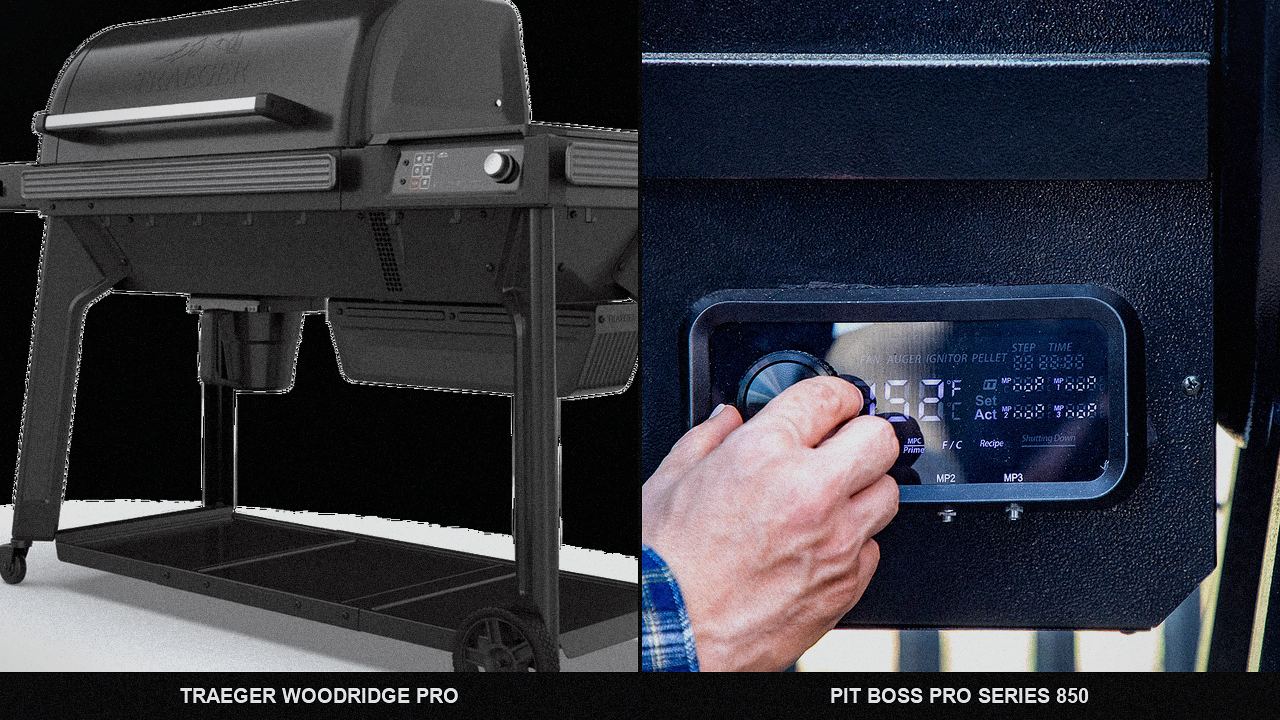
I want to be careful here, because I have not published bench-logged swing data for every model in this matchup yet. What I can tell you comes from two places: my own cooks on both brands, and the owner-complaint record I keep on file.
My experience first. On overnight briskets the Woodridge Pro behaves like a thermostat with a chimney. Set 225°F, walk away, come back to 225°F. The Pit Boss Pro Series 850 holds well in calm weather but reacts more visibly to wind and lid opens, and I find myself checking it more often. That is a feel judgment, not a logged spread, and I will say so plainly until I finish the side-by-side logging protocol described on how we test.
The complaint record is harder evidence. The Competition Series 1250, a 1,315 square inch Pit Boss that has since been discontinued, drew owner reports of huge temperature swings before Pit Boss replaced it in the lineup with the Pro Series 1150. Traeger's current line has no equivalent temperature complaint in my file. The closest thing on the Traeger side is a different gripe entirely, which I will get to in the problems section below. For a matchup where temperature control is the whole contest, my recteq vs Traeger comparison is the sharper read.
Which one sears better?
Pit Boss, and it is not close. Every current Pit Boss model, Sportsman, Navigator 850, Pro Series 850 and 1150, has a slide-open flame broiler that exposes food to live fire. No current Traeger offers direct-flame access; you are searing on grates over a deflector at 500°F, which browns but never chars.
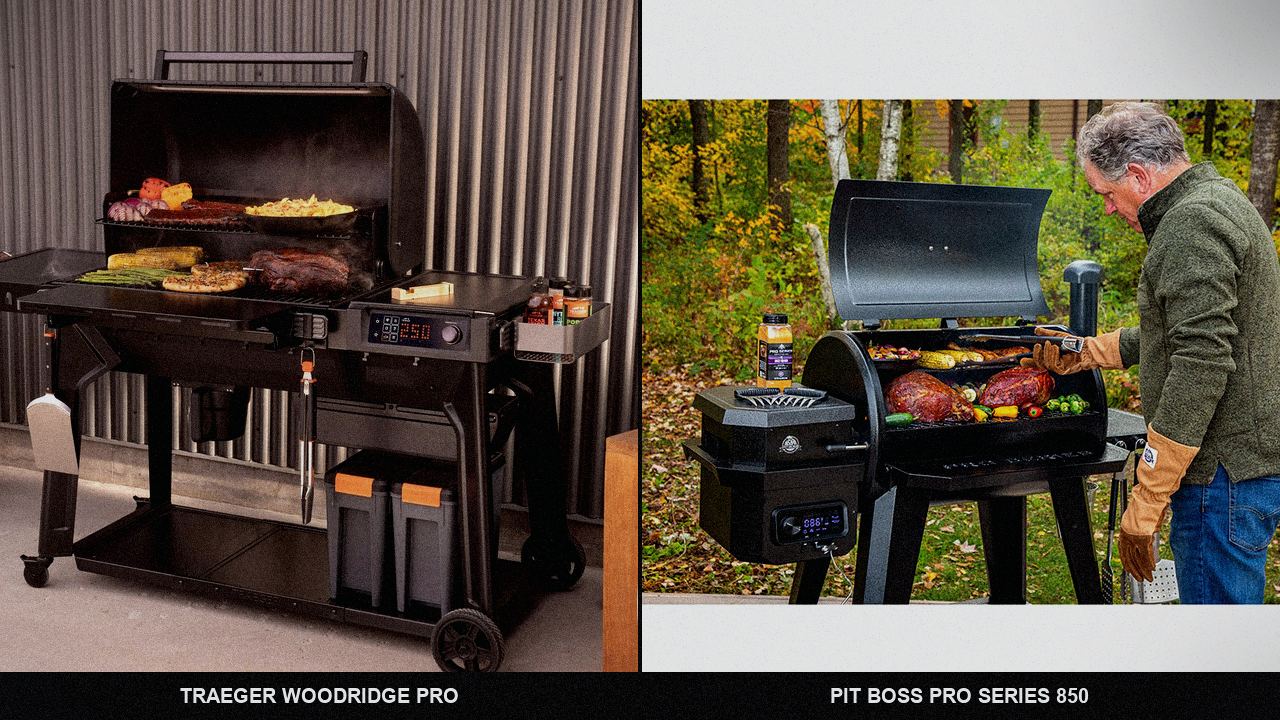
Both brands claim the same 500°F ceiling on their full-size models, so the spec sheet looks like a tie. It is not. Number on the dial and heat at the grate are different things when a steel deflector sits between your steak and the fire.
| Model | Max temp | Direct-flame sear |
|---|---|---|
| Traeger Woodridge / Pro / Elite | 500°F | No |
| Traeger Ironwood / Timberline lines | 500°F | No |
| Traeger Tailgater 20 | 450°F | No |
| Pit Boss Sportsman | 500°F | Yes |
| Pit Boss Navigator 850 | 500°F | Yes |
| Pit Boss Pro Series 850 / 1150 | 500°F | Yes |
On the Pit Boss, I pull the slide plate, wait for the flame to lick through the opening, and get real steakhouse crust in about two minutes a side. On a Traeger I reverse-sear by cranking to 500°F and accepting browning instead of char, or I carry the steak to a separate burner. Traeger is not alone in ceding this ground; the whole direct-flame question also decides my Traeger vs Camp Chef matchup. And for full disclosure, the grill that wins my overall rankings sits outside this fight entirely: the Weber Searwood XL is my top pick of everything I have tested, and you can check the current price if searing is what you care about most.
What are the common problems with Pit Boss grills?
The headline complaint in my file is temperature instability on older models: owners of the discontinued Competition Series 1250 reported huge temp swings. The current Pro Series replaced that generation. Beyond that, the honest knock is structural: a 5 year warranty against Traeger's 10, and a lineup that turns over fast.
I keep an owner-report file on every grill the site covers, built from live searches of Reddit, X, and owner forums, and refreshed on a schedule. For Pit Boss, the documented entries are thinner than the brand's internet reputation suggests, which is itself useful information. The verified items:
- Temp swings, Competition Series 1250. Multiple owners reported huge swings on this 1,315 square inch model. Pit Boss discontinued it; the Pro Series 1150 is the replacement.
- Lineup churn. The Austin XL, a 1,005 square inch fan favorite without WiFi, is also discontinued, replaced by the Pro Series 850. Two dead flagships in one generation means parts and accessory availability deserve a check before you buy secondhand.
- The warranty gap. Every Pit Boss I track carries 5 years of coverage. Every current full-size Traeger in my registry carries 10. That is not a defect, but it tells you how long each company expects to stand behind the steel.
Traeger does not escape this section clean. The Woodridge Pro, my pick of their line, draws occasional Reddit reports of less smoke flavor than expected. I partly recognize the complaint: the clean, efficient burn that makes the controller so steady also produces a milder profile than a dirtier fire would. My fix is a smoke tube and coarser pellets, and it works, but you should know the tradeoff exists.
What is the life expectancy of a Pit Boss pellet grill?
Nobody can hand you an honest single number, so anchor on what is documented: Pit Boss backs its grills for 5 years, Traeger backs its current line for 10. In my experience lifespan tracks maintenance more than badge: covered, vacuumed, and kept on dry pellets, either brand outlives its warranty.
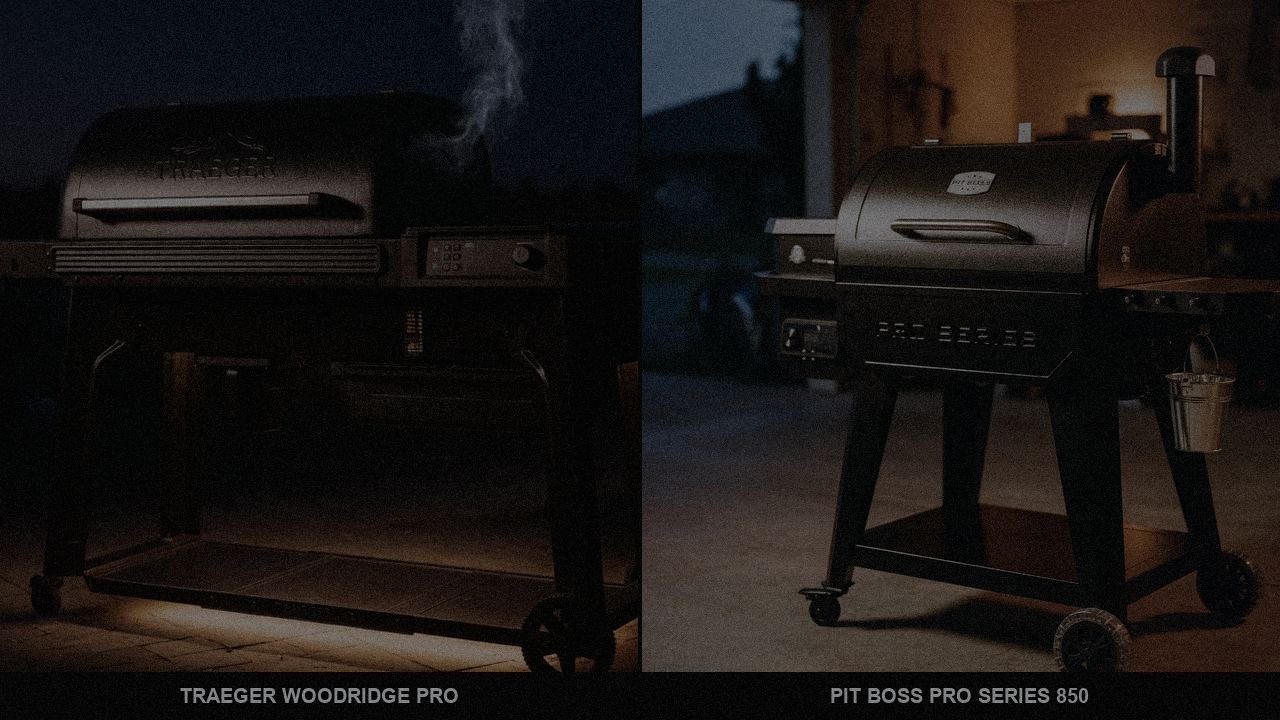
I distrust every "Pit Boss lasts X years" claim you will read elsewhere, because no one publishes failure data and I refuse to invent a figure. What I can give you is the reasoning I use myself.
The warranty is each company's own bet on its hardware, made with real money. Pit Boss bets 5 years. Traeger, on everything current in my registry from the $899.99 Woodridge to the Timberline XL, bets 10. Companies do not double their exposure for marketing fun; that gap reflects a real difference in how the two firms price their risk.
The second anchor is what actually kills pellet grills, and it is rarely the brand. It is water in the hopper turning pellets to mush, ash left to cake in the fire pot, and grease fires from a barrel that never gets scraped. My oldest test units from both companies still light every time, and the difference between them after years outdoors is cosmetic. Buy a cover, vacuum the fire pot every few cooks, store pellets indoors. Do that, and the 5 versus 10 year question becomes about who pays for a failed igniter, not whether the grill survives.
Which brand gives you more grill for the money?
Pit Boss, decisively. The Sportsman delivers 849 square inches for $749.99, about $0.88 per square inch. Traeger's best value, the base Woodridge, costs $1.05 per square inch, the Woodridge Pro runs $1.19, the new Pro Plus is $1.44, and the Woodridge Elite hits $1.86 for the same 970 square inch deck.
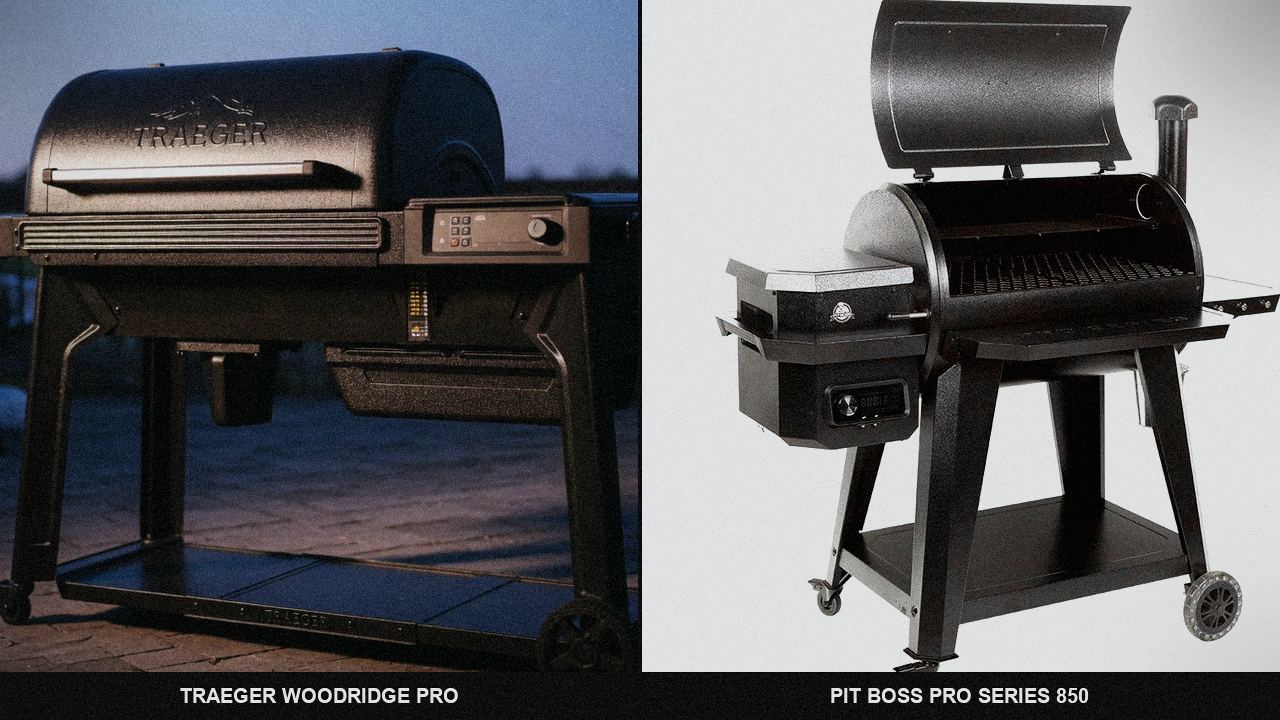
This is the value math, computed only from manufacturer list prices and areas checked 2026-08-24. I limit the table to models where I hold both numbers.
| Model | Price | Cooking area | Price per sq in |
|---|---|---|---|
| Pit Boss Sportsman | $749.99 | 849 sq in | $0.88 |
| Traeger Woodridge | $899.99 | 860 sq in | $1.05 |
| Traeger Woodridge Pro | $1,149.99 | 970 sq in | $1.19 |
| Traeger Woodridge Pro Plus | $1,399.99 | 970 sq in | $1.44 |
| Traeger Woodridge Elite | $1,799.99 | 970 sq in | $1.86 |
The pattern holds across tiers, and it gets starker at the top: the Elite charges $650 more than the Woodridge Pro for the same cooking area, the same 24 pound hopper, and the same 500°F ceiling. The Pro Plus sits in the middle of that gap and buys you cabinets, not more grate. Meanwhile the cheapest grill on the table is the only one that can sear over live flame. If pure dollars per inch is your whole decision, Pit Boss is not even the endpoint of that road; the budget fight in my Pit Boss vs Z Grills comparison pushes the math further down.
What the table cannot show is what the extra Traeger dollars buy: the controller behavior, the app, the doubled warranty, and, when you eventually sell, a resale market that recognizes the badge. I have sold used units from both brands, and the Traeger listings drew replies in hours. That is worth real money, just not money that fits in a per-square-inch column.
Which one should a first-timer buy?
A first-timer who wants the shortest path from unboxing to good brisket should buy the Traeger, specifically the Woodridge line. The controller forgives mistakes, the app teaches as you cook, and the 10 year warranty removes the fear. Buy the Pit Boss Sportsman instead if the budget stops at $750.
Here is the thing about first grills that spec sheets miss: the biggest risk is not a bad feature, it is quitting. A new owner who fights temperature swings on cook three, serves rubbery chicken to guests, and gets discouraged will park the grill by August. The Traeger experience is engineered against exactly that failure. You set a number, the grill hits it, the app pings your phone when the food probe says done. My first months on a pellet grill would have gone very differently with that safety net.
The counterargument is real, though. At $749 the Sportsman leaves $429 in your pocket versus the Woodridge Pro, and that difference buys a year of pellets, a good thermometer, and several briskets' worth of practice meat. Nothing teaches like repetitions. A first-timer who is even slightly handy, reads the manual, and does not mind babysitting early cooks will come out the far side a better pitmaster for having driven the manual transmission. Both roads lead somewhere good. One is just smoother.
Who should spend the extra money on the Traeger?
Spend up if you run long overnight cooks, live somewhere windy or cold, plan to keep the grill past year five, or want your phone as the control panel. Skip the premium if you mostly grill hot and fast on weekends, because then you are paying Traeger prices for a searing feature Pit Boss gives away.
The Traeger premium, roughly $150 to $400 depending on which models you cross-shop, is really an insurance-plus-convenience bundle. The insurance half is literal: years six through ten of warranty coverage exist only on the Traeger side of this page. If you intend to still own this grill when your kid graduates, that half alone can justify the spread.
The convenience half matters most to a specific cook: the one doing 14 hour briskets who wants to sleep, the one smoking through a Midwest November, the one who checks the pit from the grocery store. That person lives in the app and leans on the controller every single cook, and for them the premium repays itself in saved attention.
Now flip it. If your log looks like mine did one July, burgers, wings, hot dogs, one lonely pork butt, you are buying polish you barely touch while giving up the flame broiler you would use every weekend. That cook should keep the change, take the Pit Boss, and put $50 of the savings into good pellets.
Verdict: Traeger or Pit Boss?
Traeger wins this matchup by a nose for most buyers, on the strength of its controller, its app, the 10 year warranty, and resale. Pit Boss is the right buy for value-first cooks: it wins price per square inch at every tier and is the only side offering direct-flame searing.
By a nose means exactly that. Pit Boss takes the two categories you can measure with a ruler and a receipt: dollars per square inch, and live fire under your steak. Those wins are real, and if they map onto how you cook, ignore the scoreboard and buy the Pit Boss with confidence. The Sportsman at $749.99 is the best pure value on this page.
Traeger takes the categories you only appreciate at hour nine of a brisket: a set point that stays set, an app worth opening, a company betting a decade on its own hardware, and a resale ad that answers itself. Those wins compound over years of ownership, which is why the Woodridge Pro is the grill I point most people toward in this pair, and the reason it sits atop the Traeger lineup on my pellet grill rankings. Neither purchase is a mistake. One is a better tool, the other is a better deal, and only you know which side of that trade you live on.
Are Pit Boss grills as good as Traeger?
For searing and value, yes and better: every current Pit Boss has a direct-flame broiler and costs less per square inch, with the Sportsman at $0.88 versus $1.05 for Traeger's cheapest current model. For temperature stability, app quality, warranty (5 years versus 10), and resale, Traeger stays ahead.
Is Traeger worth the extra money over Pit Boss?
It is if you cook long and slow often, want the best app in the category, or plan to own the grill past year five, since Traeger's 10 year warranty doubles Pit Boss coverage. It is not if you mostly sear and grill hot, where Pit Boss's flame broiler beats anything Traeger sells.
Can a Traeger sear a steak?
Only indirectly. Current Traegers top out at 500°F with a deflector plate between the fire and the grates, so you get strong browning rather than open-flame char. Every current Pit Boss includes a slide-open flame broiler for true direct searing, which is the single biggest feature gap between the brands.
Which Pit Boss is closest to the Traeger Woodridge Pro?
The Pro Series 850 is the natural rival: 850 square inches to the Traeger's 970, a 20 pound hopper to its 24, and the same 500°F ceiling, both with WiFi. The Pit Boss adds direct-flame searing; the Traeger answers with a 10 year warranty against 5.
Is the Pit Boss Austin XL still available?
No, the Austin XL is discontinued, along with the Competition Series 1250. Pit Boss points Austin XL buyers to the Pro Series 850, which adds the WiFi the Austin lacked, and Competition 1250 buyers to the Pro Series 1150 with its 1,150 square inches and 32 pound hopper.