Traeger vs Green Mountain Grills: I Ran Both, Here Is Who Actually Wins
Traeger vs Green Mountain Grills, tested side by side: prices, warranties, WiFi, owner complaints, and the one case where the cheaper GMG is the smarter buy.
 By Oleg Galeev, cooking on pellet grills since 2020, runs the OleGrill YouTube channel
Short answer
Traeger wins for most buyers on build depth, a 10 year warranty across the Woodridge line, and a lineup ten models deep. Green Mountain is the value sleeper: WiFi standard on every model, including the $399 portable Trek, at prices that mostly undercut Traeger, but with 3 year warranties and noisier owner reports.
Live prices. Affiliate links: we may earn a commission at no extra cost to you. How this works.
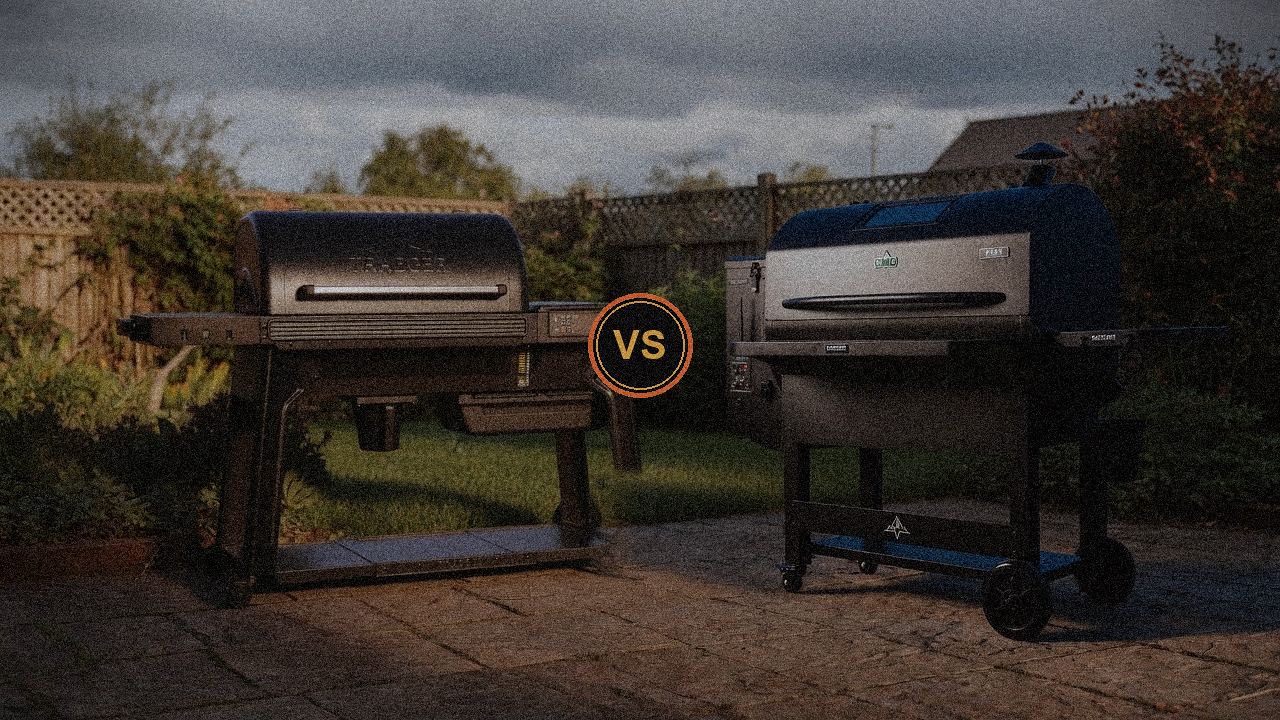
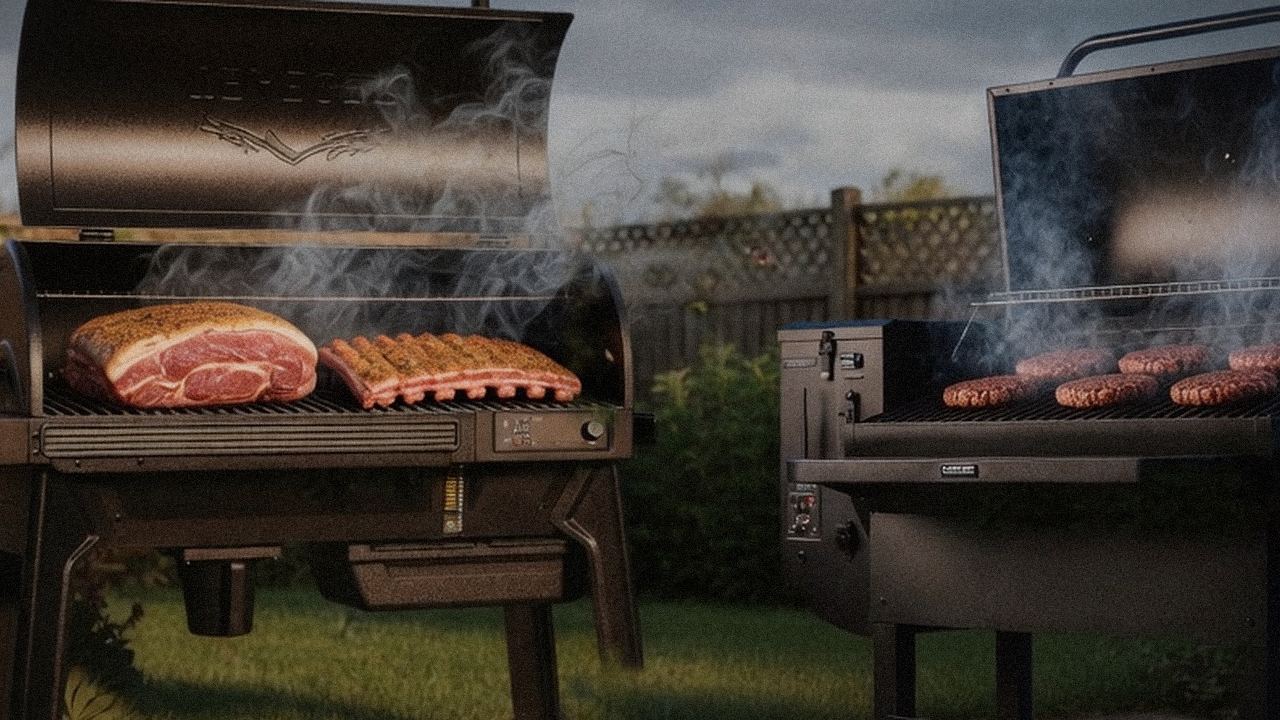
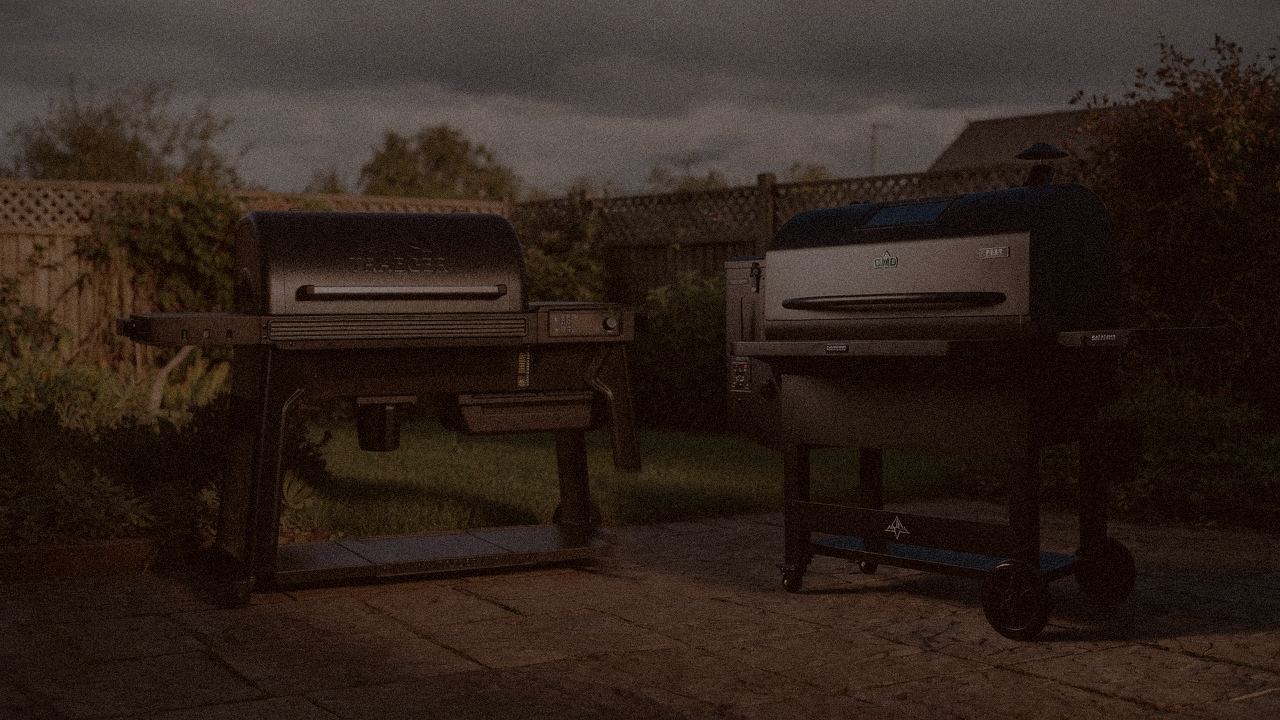
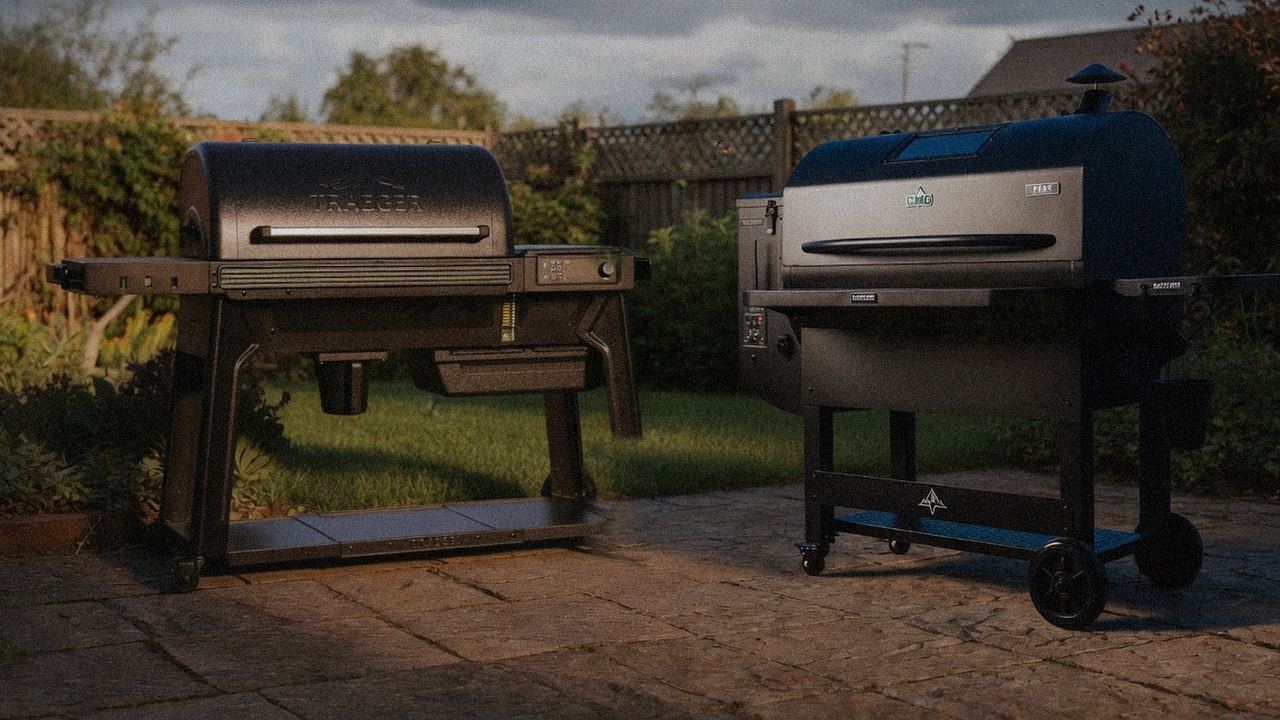
The Ledge and the Woodridge shared my deck for three weekends, close enough that their WiFi networks fought over my phone. Same pellets, same rub, ribs going on within minutes of each other. The Ledge cost $699 and chirped its app alerts like an eager intern. The Woodridge cost $900 and just sat there holding temp, quiet and boring. That gap, $200 of boring competence, is the whole Traeger vs Green Mountain question in one picture. It is one of the matchups behind the best wood pellet grills rankings on this site.
Pull temps still follow the USDA safe minimum internal temperatures for poultry, pork, and ground beef, no matter which hopper you bought.
Warranty language is what Traeger's warranty page actually publishes, not a forum guess.
What is the difference between Traeger and Green Mountain grills?
Traeger sells a ten model lineup with 10 year warranties on its Woodridge and Timberline tiers and the biggest dealer network in pellets. Green Mountain sells three grills, tops out at $999, puts WiFi on every unit including the $399 portable Trek, and backs everything with a 3 year warranty.
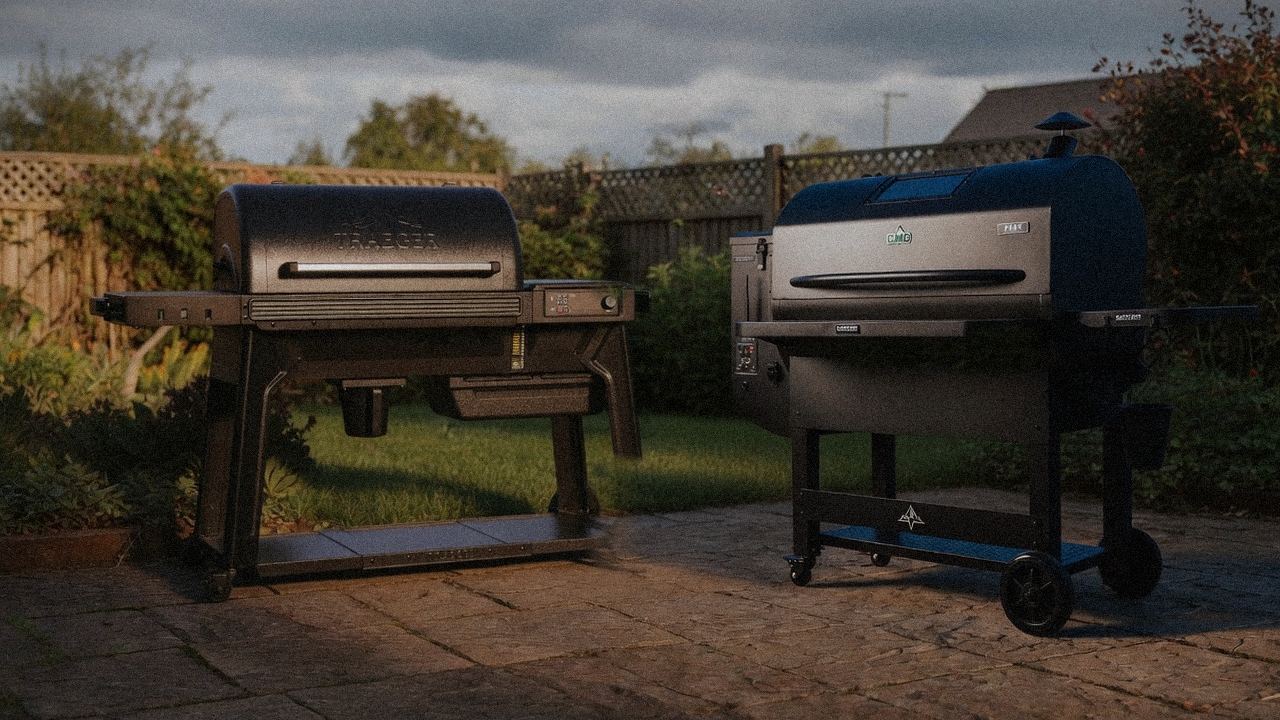
Here is the flagship-for-flagship view, our Traeger Woodridge against GMG's top model, the Peak. Both brands burn pellets through the same basic auger, fan, and firepot layout that defines the pellet grill category, so the differences live in the details.
| Spec | Traeger Woodridge | GMG Peak |
|---|---|---|
| Price | $900 | $999 |
| Cooking area | 860 sq in | - |
| Hopper | 24 lb | 19 lb |
| Max temp | 500°F | 550°F |
| WiFi | Yes | Yes |
| Direct sear | No | No |
| Warranty | 10 years | 3 years |
Two things jump out. GMG claims a higher max temp, 550°F against Traeger's 500°F, yet neither grill offers true direct-flame searing, and Peak owners report it is not suited to high-heat searing without accessories anyway. And the warranty gap is not subtle: a decade against three years. If searing is what you actually care about, the Traeger vs Camp Chef matchup is the more relevant fight.
How do the two lineups match up on price?
Green Mountain's entire ladder, Trek at $399, Ledge at $699, Peak at $999, fits underneath Traeger's mid range. Traeger's Woodridge tier alone runs $900 to $1,800, and the Ironwood sits at $1,700. GMG wins the entry price war outright; Traeger simply refuses to compete down there.
| Model | Price | Hopper | Max temp | WiFi | Warranty |
|---|---|---|---|---|---|
| GMG Trek | $399 | 10 lb | 550°F | Yes | 3 yr |
| GMG Ledge | $699 | 19 lb | 550°F | Yes | 3 yr |
| Traeger Woodridge | $900 | 24 lb | 500°F | Yes | 10 yr |
| GMG Peak | $999 | 19 lb | 550°F | Yes | 3 yr |
| Traeger Woodridge Pro | $1,178 | 24 lb | 500°F | Yes | 10 yr |
| Traeger Woodridge Elite | $1,800 | 24 lb | 500°F | Yes | 10 yr |
The Trek deserves its own sentence. It is a $399 portable with WiFi as standard equipment. Traeger's own portable, the Tailgater 20, has no WiFi at all and tops out at 450°F. For a truck-bed grill you can watch from inside the cabin, GMG is not just cheaper, it is the only one of the two offering the feature. Shoppers hunting this end of the market usually cross-shop cheaper brands too, which is why the Traeger vs Pit Boss comparison gets so much traffic.
Which brand holds temperature better?
I have not published head-to-head hold scores for these specific models yet, so I will say what the evidence supports: owner reports lean Traeger. Trek owners describe swings with overshoots reaching 100°F past setpoint, while Traeger's current lineup draws almost no temperature complaints in the reports we track.
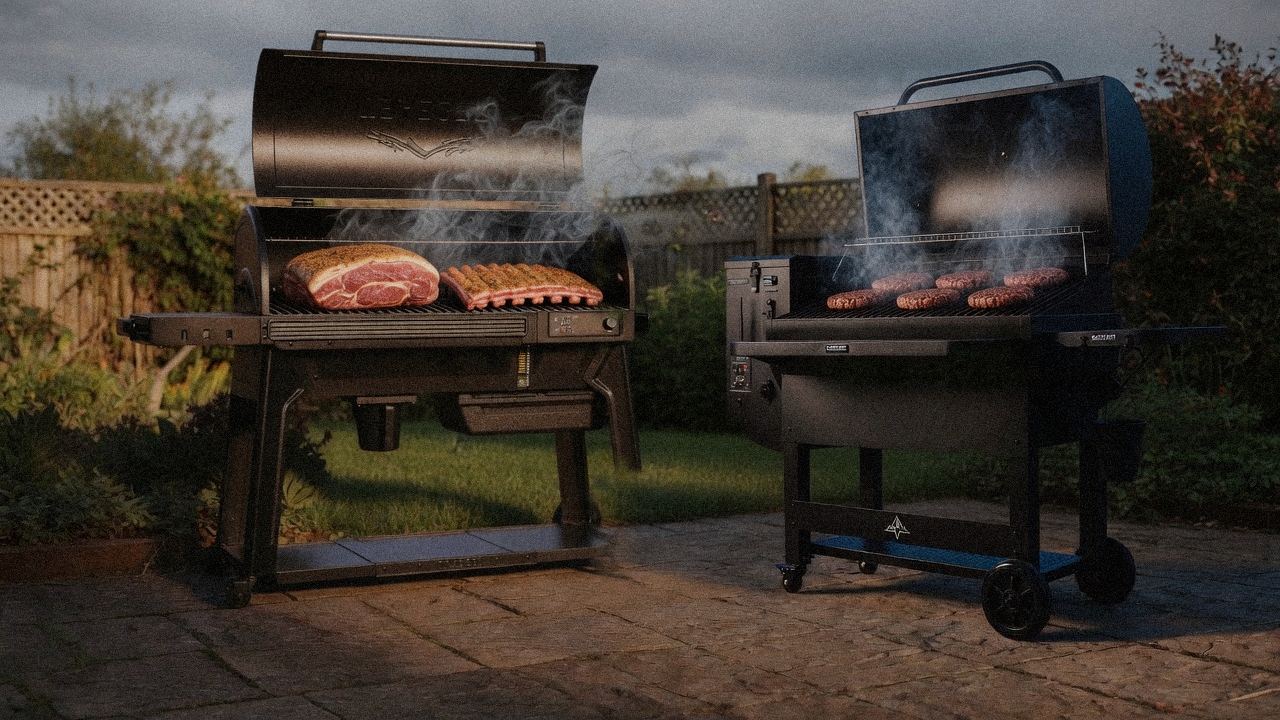
That asymmetry matters more than a spec sheet. On my deck the Woodridge has been the boring one in the best way, but my honest caveat stands: those are impressions, not logged deltas, and until the full protocol runs on both flagships I will not print numbers I did not measure. What I can print is the complaint record. GMG's temperature grievances span two of its three models. Traeger's most common current-model gripe is different in kind, not degree: some Woodridge Pro owners report less smoke flavor than expected, which is a flavor preference issue rather than a control failure.
One more wrinkle: a grill that overshoots by triple digits is not merely annoying. It turns a 225°F rib cook into a 325°F sprint while you are inside watching the game, and the app that should warn you is the same app owners report dropping connections.
Which is built to last?
Traeger, and it is not close on paper. The Woodridge line carries a 10 year warranty; every GMG carries 3 years. GMG owner reports include rust developing under the paint within months on the Ledge, plus auger motor, motherboard, and igniter failures. Traeger's current models show no comparable hardware pattern.
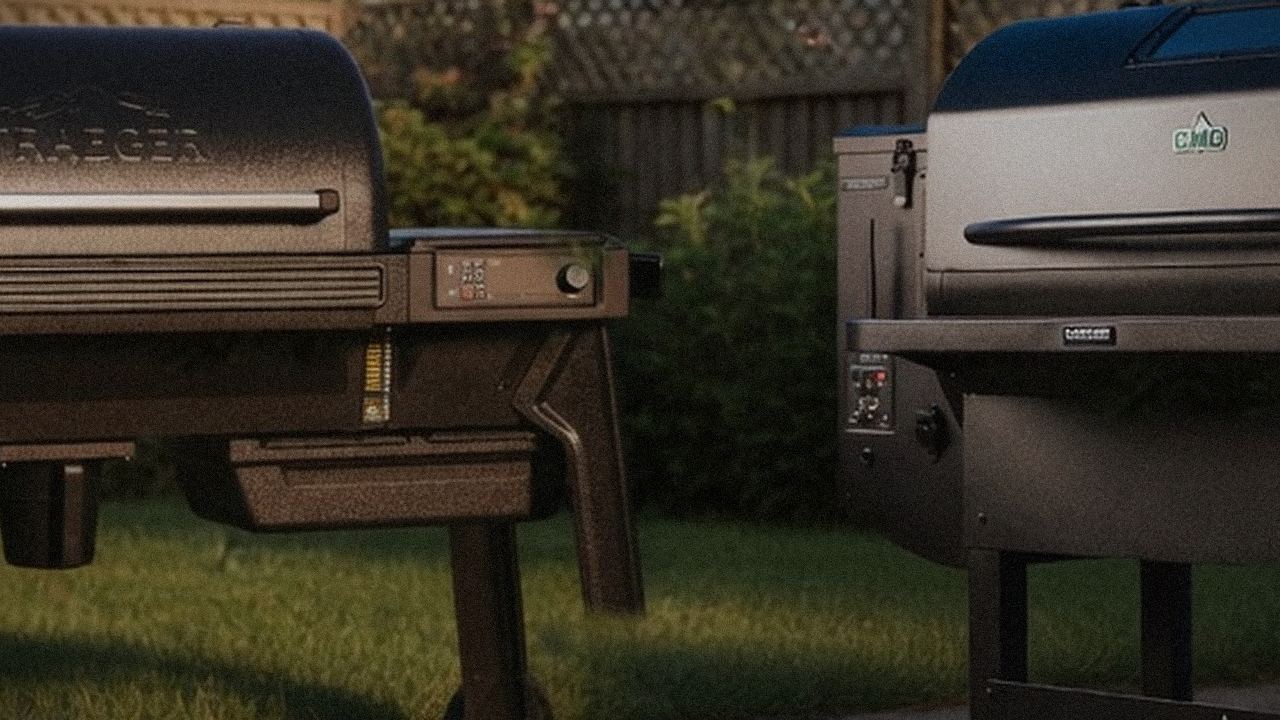
A warranty is a bet the manufacturer places on its own build. Traeger betting a decade on the Woodridge trio while GMG bets three years on everything tells you where each company thinks its weak points are. The rust reports are the part I would weigh hardest, because paint bubbling in the first year is not something a controller update fixes.
Worth saying plainly: neither brand takes the overall build crown on this site. That belongs to the Weber Searwood XL, our top pick across every grill we have tested, and you can check the current price on it or see how the whole field stacks up on the pellet grills rankings.
What do owners actually complain about?
GMG complaints cluster on hardware: temperature swings, igniter and auger failures, rust, false low-pellet alarms, and flaky WiFi. Traeger's current-lineup complaints are thinner and softer, mostly Woodridge Pro owners wanting more smoke flavor. The pattern is reliability grumbles on one side, taste preference on the other.
| Model | Most reported problems |
|---|---|
| GMG Trek | Temp swings with +100°F overshoots, igniter failures after limited use, app and WiFi dropouts |
| GMG Ledge | Rust under paint after months, auger motor and motherboard and igniter failures, false low-pellet alarms |
| GMG Peak | Occasional auger feed or control board issues, some rust reports, weak direct searing without accessories |
| Traeger Woodridge Pro | Occasional reports of less smoke flavor than expected |
Which brand is the better value?
Depends which math you run. On sticker price GMG wins every tier it enters. On price per year of warranty coverage, Traeger flips the table: the $900 Woodridge costs $90 per covered year, while the $399 Trek costs $133 and the $999 Peak a painful $333 per covered year.
| Model | Price | Warranty | Price per covered year |
|---|---|---|---|
| Traeger Woodridge | $900 | 10 yr | $90 |
| Traeger Woodridge Pro | $1,178 | 10 yr | $118 |
| GMG Trek | $399 | 3 yr | $133 |
| Traeger Woodridge Elite | $1,800 | 10 yr | $180 |
| GMG Ledge | $699 | 3 yr | $233 |
| GMG Peak | $999 | 3 yr | $333 |
I cannot run the price-per-square-inch version fairly because GMG does not have verified cooking areas in our data sheet, and I will not guess at numbers. For Traeger the Woodridge works out to about $1.05 per square inch on its 860 sq in of grates. What the warranty math says is blunt: the closer a GMG gets to Traeger money, the worse the deal becomes. The Peak at $999 asks Woodridge money for less hopper, a shorter warranty, and a noisier complaint file. If pure budget value is the mission, the Z Grills vs Traeger fight covers that angle better than GMG does.
Which one should a first-timer buy?
The Traeger Woodridge. A first pellet grill teaches you the hobby, and it teaches best when the grill itself is not the variable. The Woodridge holds temp without drama, carries a 24 lb hopper that outlasts a brisket, and its 10 year warranty means a rookie mistake is never a terminal one.
First-timers underestimate how much a flaky grill costs them in confidence. When your ribs stall, you want to know it is the meat doing meat things, not the controller wandering. The complaint file on GMG's cheaper units, swings, igniters, alarms that cry wolf, describes exactly the noise a beginner cannot yet diagnose. The Woodridge's blandest quality, that nothing eventful happens during a cook, is precisely what someone learning the craft should pay for. And if the $900 is a stretch, stretch anyway or wait for a sale; the warranty alone amortizes the difference.
Who should buy Green Mountain anyway?
Two buyers. The tailgater or camper who wants a real WiFi pellet grill at $399, because the Trek has no rival at that price and Traeger's own portable offers no WiFi at all. And the strict-budget backyard cook who accepts a 3 year horizon in exchange for saving $200 or more upfront.
The Trek is the honest star of GMG's lineup. A 10 lb hopper, 550°F ceiling, app control from the truck cab, at a price where the competition offers dials and hope. Go in with clear eyes about the complaint file, keep the receipts, register the warranty. The Ledge case is thinner but real: $699 with WiFi buys a lot of grill if you are willing to babysit it a little and season the steel against the rust reports. The Peak I would skip entirely; at $999 it competes with the Woodridge and loses on almost every line of the table above.
Verdict: which brand wins?
Traeger, for most people. Deeper build quality, warranties three times longer, ten current models against three, and a support network GMG cannot match. Green Mountain earns its place as the sleeper value pick, and for a portable WiFi grill the $399 Trek is not just the better buy, it is the only option in this matchup.
Buy the Woodridge if you want the grill you stop thinking about. Buy the Trek if the grill needs to ride in a truck bed and still talk to your phone. Just do not pay Peak money for a 3 year promise when the same cash buys a decade.
Is Green Mountain as good as Traeger?
Not overall. GMG matches Traeger on WiFi and beats it on entry price, with the whole lineup running $399 to $999. But Traeger backs its Woodridge line with a 10 year warranty against GMG's 3 years, and GMG owner reports show more hardware trouble: temperature swings, igniter failures, and rust.
Are Green Mountain grills reliable?
Mixed. Owner reports on the Trek include temperature overshoots up to 100°F and igniter failures after limited use; Ledge reports add rust under the paint plus auger motor and motherboard failures. Plenty of units run fine, but the complaint file is noisier than Traeger's current lineup, and the 3 year warranty is your safety net.
Does the GMG Trek really have WiFi for $399?
Yes. WiFi is standard on every current Green Mountain grill, including the $399 portable Trek. That is a genuine edge in this matchup, since Traeger's portable Tailgater 20 has no WiFi and a lower 450°F max temp. Some Trek owners do report app connectivity dropouts, so expect occasional reconnects.
Is Traeger's warranty really 10 years?
On the current Woodridge, Woodridge Pro, and Woodridge Elite, yes, 10 years, and the Timberline and Timberline XL carry the same coverage. That is more than three times Green Mountain's 3 year warranty, and it is the single biggest spec gap between the two brands.
Which is better for the money, Traeger or Green Mountain?
Upfront, Green Mountain: the Ledge at $699 undercuts the cheapest Woodridge by $200. Per year of warranty coverage, Traeger: the $900 Woodridge works out to $90 per covered year against $233 for the Ledge and $333 for the Peak. Short horizon favors GMG, long ownership favors Traeger.