Pit Boss vs Camp Chef: I Cook on Both, Here Is Where Each One Wins
Pit Boss vs Camp Chef from someone who runs both brands: temperature control, smoke output, ash cleanout, warranty math, and which lineup gives you more grill for the money.
 By Oleg Galeev, cooking on pellet grills since 2020, runs the OleGrill YouTube channel
Short answer
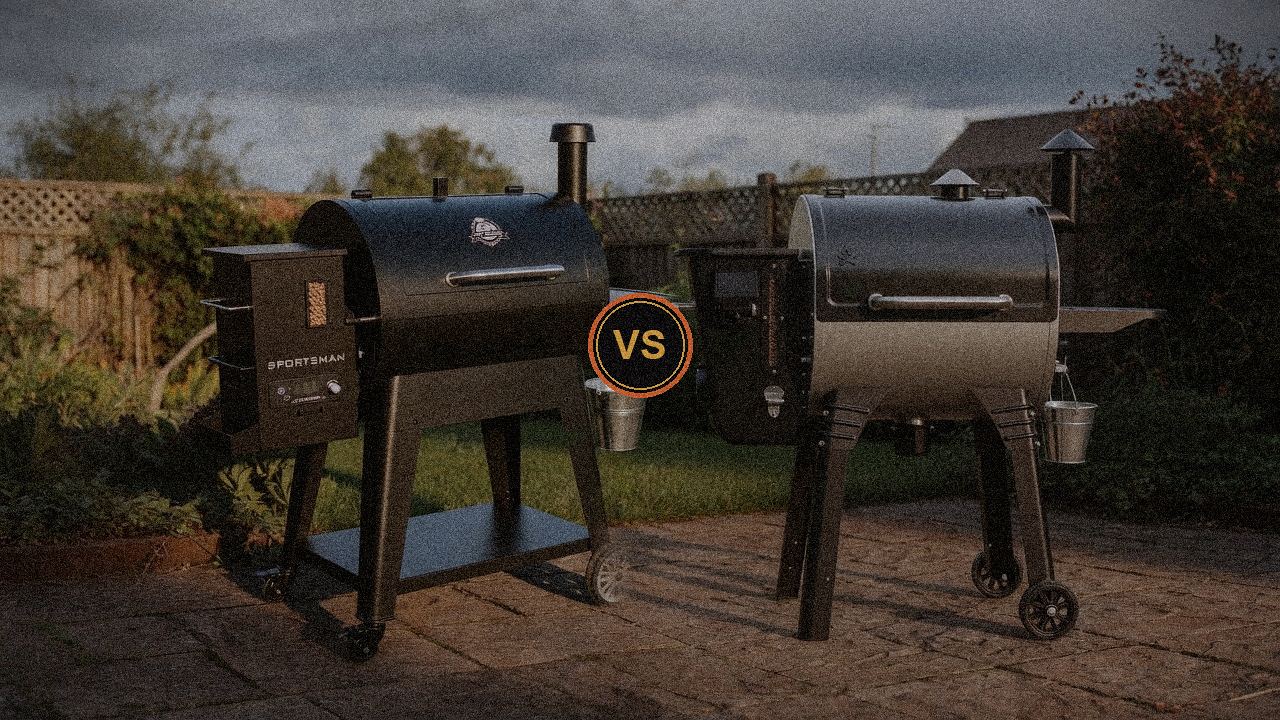
Camp Chef wins for the cook who cleans and tinkers: a real ash cleanout, the Smoke Number dial, and better fit and finish per dollar at the mid tier. Pit Boss wins raw size for the money and retail availability, and backs it with a 5-year warranty against Camp Chef's 3.
Live prices. Affiliate links: we may earn a commission at no extra cost to you. How this works.
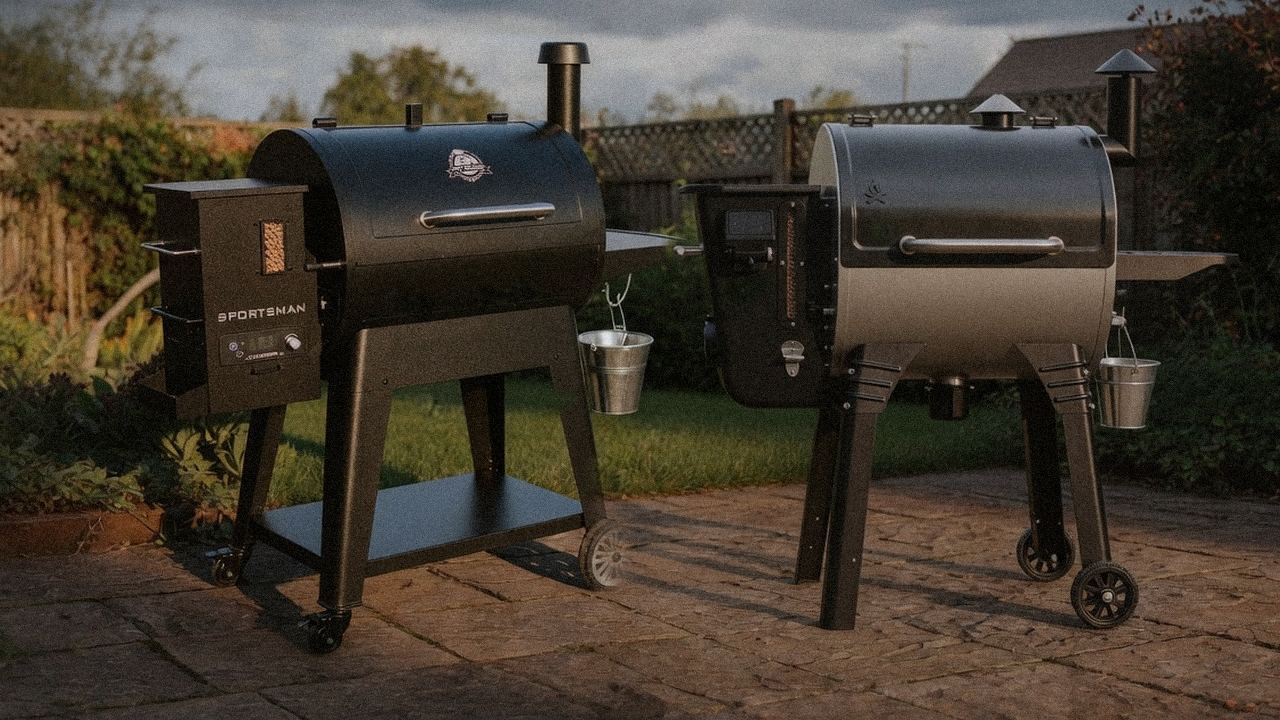
Cleanup day is when these two brands stop being interchangeable. After back-to-back pork butt cooks I stood between a Pit Boss Pro 850 and a Camp Chef Woodwind 24 with a shop vac in one hand. The Pit Boss got the vac, grates out, twenty minutes of gray dust. On the Woodwind I pulled a lever, the ash dropped into a cup, and I was done before the vac's cord was untangled. That one moment explains half of this comparison. The other half is about money, because Pit Boss plays a price game Camp Chef does not even enter. It is one of the matchups behind the best wood pellet grills rankings on this site.
Pull temps still follow the USDA safe minimum internal temperatures for poultry, pork, and ground beef, no matter which hopper you bought.
Warranty language is what Pit Boss's warranty page actually publishes, not a forum guess.
How do the current lineups compare on paper?
Both brands run the same 500°F ceiling, WiFi controllers, and slide-plate direct searing on their mainline grills. Pit Boss counters Camp Chef's polish with bigger hoppers and a 5-year warranty against Camp Chef's 3. Sizes overlap heavily: 811 to 1,236 square inches across the two current lineups.
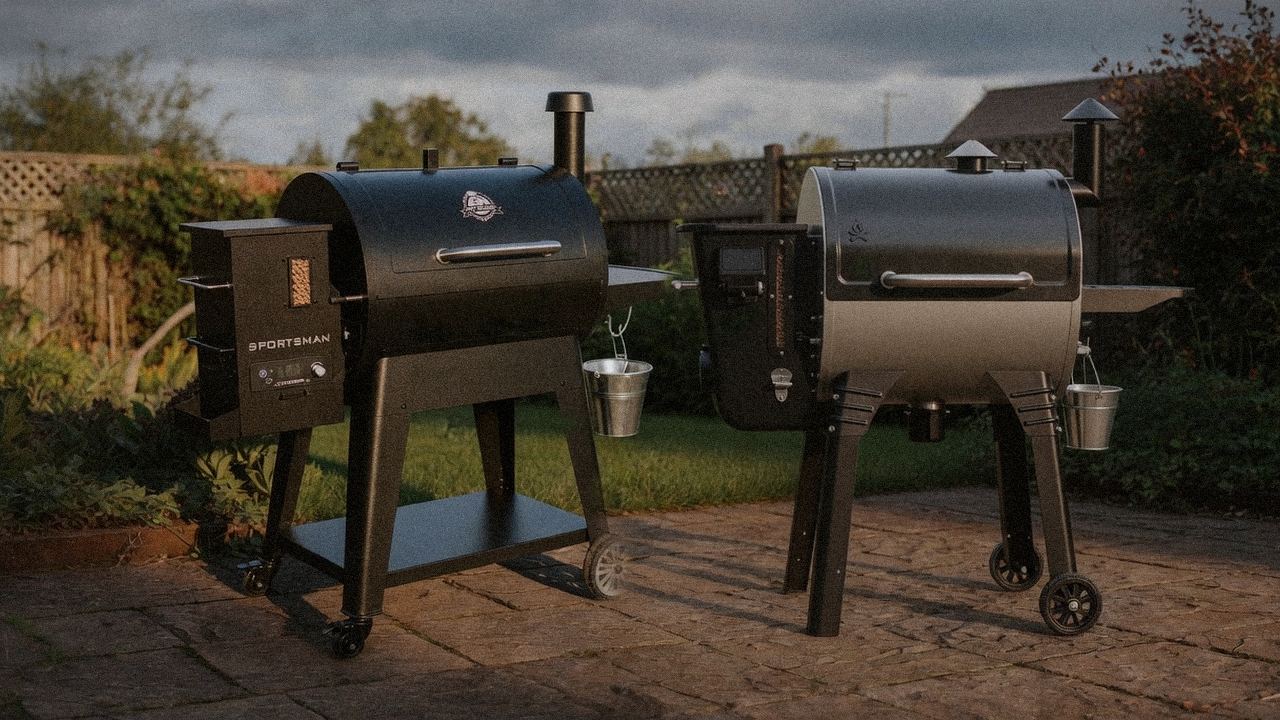
Here is every current model from our verified spec sheet, side by side. A dash means the number is not in our file, and I will not guess at it.
| Model | Price on file | Area (sq in) | Hopper | Max temp | WiFi | Sear | Warranty |
|---|---|---|---|---|---|---|---|
| Pit Boss Pro 850 | - | 850 | 20 lb | 500°F | Yes | Yes | 5 yr |
| Pit Boss Pro 1150 | - | 1,150 | 32 lb | 500°F | Yes | Yes | 5 yr |
| Pit Boss Sportsman | $749 | 849 | 21 lb | 500°F | Yes | Yes | 5 yr |
| Pit Boss Navigator 850 | - | 905 | - | 500°F | Yes | Yes | 5 yr |
| Camp Chef Woodwind 24 | - | 811 | 22 lb | 500°F | Yes | Yes | 3 yr |
| Camp Chef Woodwind 36 | - | 1,236 | 22 lb | 500°F | Yes | Yes | 3 yr |
| Camp Chef Woodwind Pro 24 | - | - | 22 lb | 500°F | Yes | - | 3 yr |
Two things jump out. Pit Boss hoppers scale with the grill, up to 32 pounds on the Pro 1150, which matters for overnight brisket. And the biggest grill on this table is actually a Camp Chef: the Woodwind 36 at 1,236 square inches. Pit Boss's size story is about what that space costs at the register, not who builds the largest box.
Which brand holds temperature better?
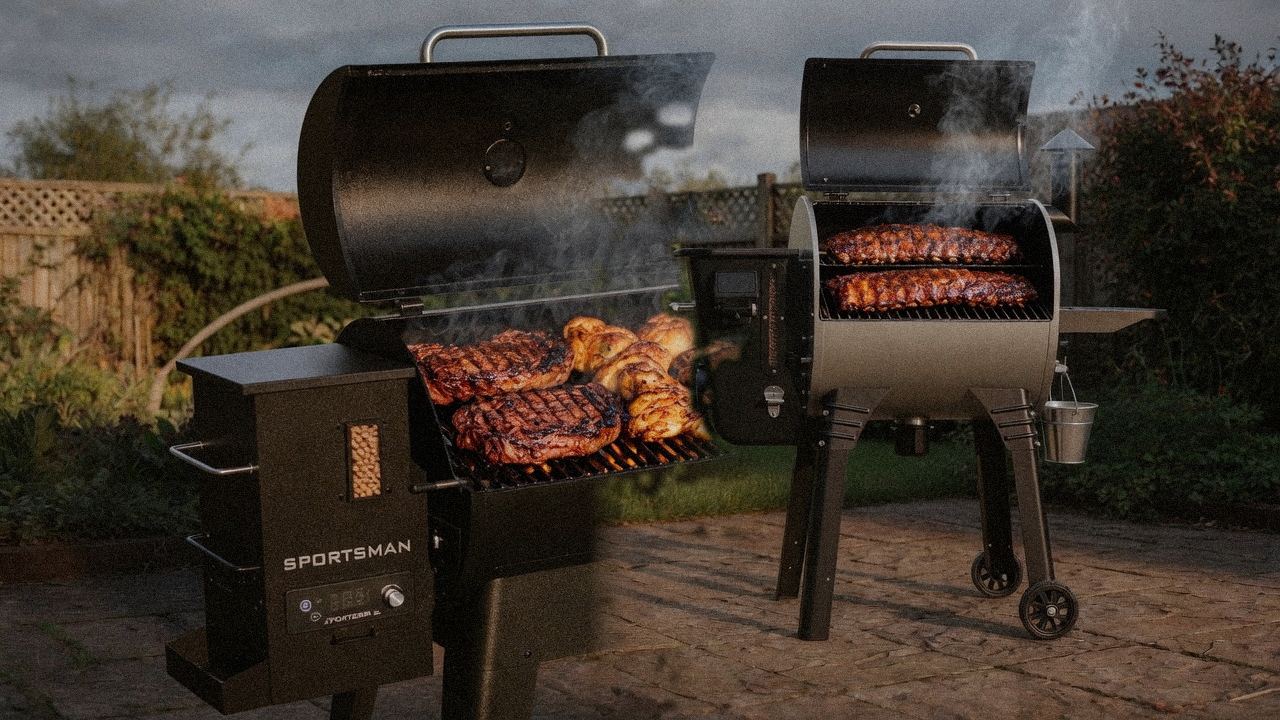
On our bench, the Camp Chef Woodwinds score 8 out of 10 for both temperature accuracy and stability, steady within a normal pellet-fire wiggle. We have not put current Pit Boss models through the same scored protocol yet, so I will not print numbers for them. The one temp complaint in our Pit Boss log belongs to a discontinued model.
Here is Camp Chef's full scored sheet, since these numbers come up in every section below:
| Dimension score (out of 10) | Woodwind 24 | Woodwind 36 | Woodwind Pro |
|---|---|---|---|
| Temp accuracy | 8 | 8 | 8 |
| Temp stability | 8 | 8 | 8 |
| Smoke | 8 | 8 | 9 |
| Build | 7.5 | 7.5 | 8.5 |
| Cleaning | 8.5 | 8.5 | 8.5 |
| App | 7.5 | 7.5 | 7.5 |
| Value | 8 | 7 | 8 |
That top row tracks with my cooks: set 225°F, walk away, come back to a pit that drifted maybe a controller's worth in either direction. A pellet grill is a thermostat with a fire attached, and Camp Chef's PID does its job without drama, though older Reddit threads record occasional swings on early Woodwind 24 units.
Pit Boss is the honest gap in this section. The current Pro and Sportsman grills have not been through our scored dimension protocol, so anything I printed would be a guess. What our problem log does hold: the Competition Series 1250, now discontinued and replaced by the Pro 1150, drew owner reports of huge temp swings. I would not hang the current lineup for a dead model's sins, but it is the only measured-adjacent data point I have, and you deserve to know that.
Who makes more smoke?
Camp Chef, and it is not close on the sheet we keep. The Woodwind 24 and 36 score 8 out of 10 for smoke, and the Woodwind Pro hits 9, the highest smoke score in this matchup, because its Smoke Box burns real wood chunks alongside the pellet fire.
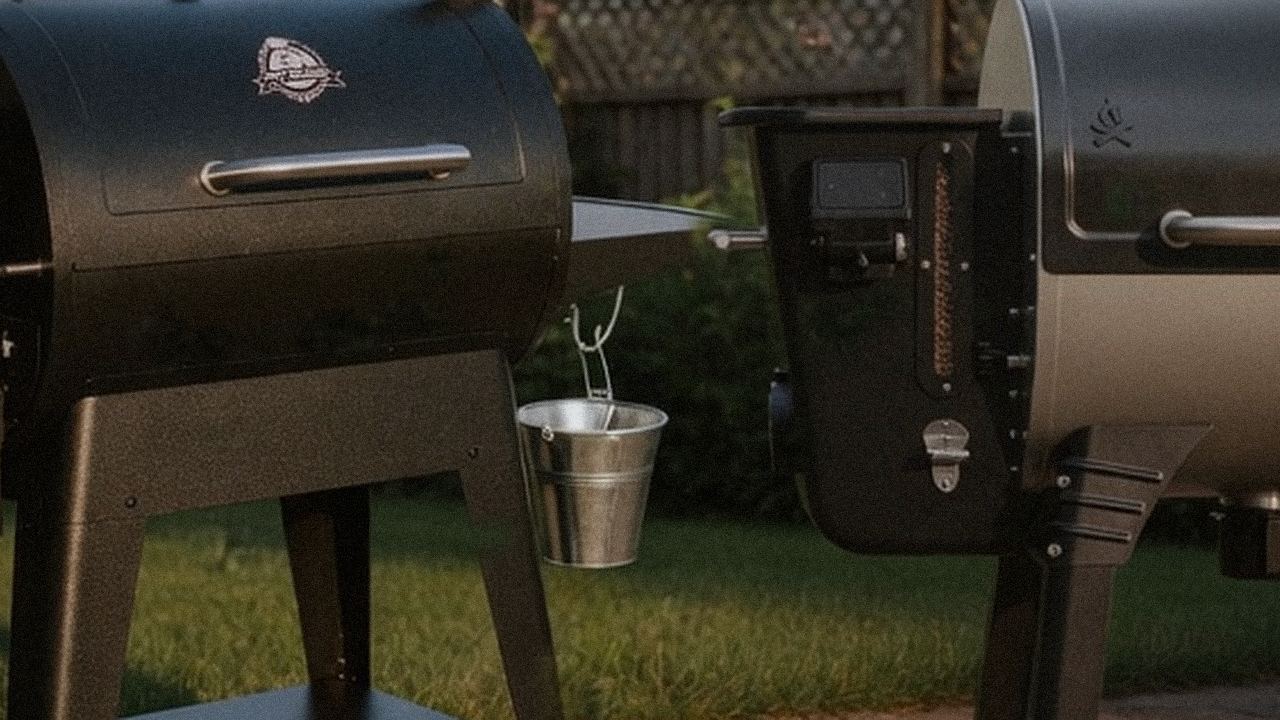
The tool that separates the brands is Camp Chef's Smoke Number dial. Pick a setting from 1 to 10 and the controller changes how it pulses the fire, trading a few degrees of steadiness for visibly more smoke. It turns smoke into a choice instead of an accident. Pit Boss's route to heavy smoke is the one every pellet grill has, running low where the fire smolders. It works, but nothing does it for you at 225°F.
The Woodwind Pro's 9 is the score that would pull me across the aisle: actual hickory chunks in the Smoke Box get you a bark and smoke ring closer to a stick burner than any straight pellet fire I have run. Camp Chef wins this same category against bigger names too, which is the spine of our Traeger vs Camp Chef comparison.
Which is easier to clean and better built?
Camp Chef, decisively, on cleanout. All three Woodwinds score 8.5 out of 10 for cleaning, the best marks in their dimension sheet, thanks to the pull-lever ash cup and pellet purge. Build scores run 7.5 on the standard Woodwinds and 8.5 on the Pro. Pit Boss cleanout is shop-vac territory.
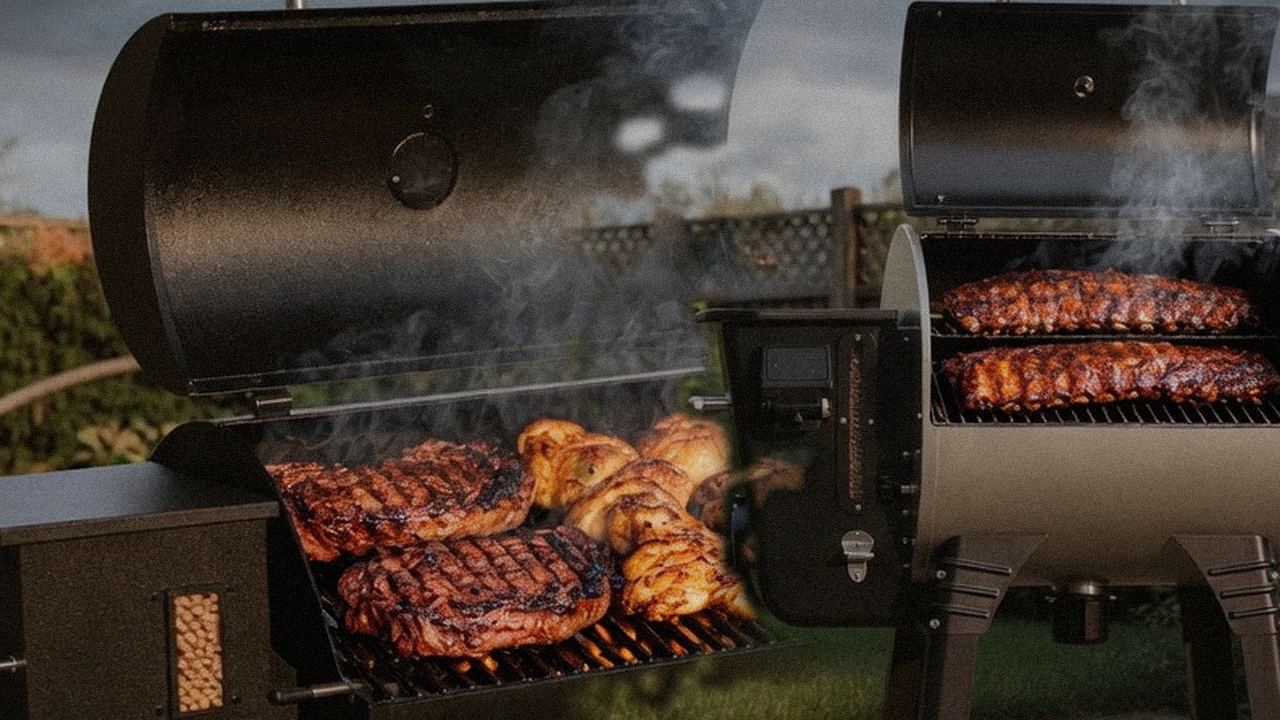
Camp Chef's ash cleanout is the feature I miss most on every other brand. Pull the lever after a cook, ash drops into a removable cup, empty it, done. The pellet purge chute is the same idea for swapping flavors or emptying the hopper before rain, and owner reviews in our file praise both features even when complaining about something else. Pit Boss cleanup means grates out, deflector out, vacuum in. Every pellet grill needs a deep clean eventually; Camp Chef stretches the interval and shrinks the job.
Fit and finish follows the same pattern per dollar. The standard Woodwinds' 7.5 build score is honest mid-tier, solid barrel with some thin spots, and the Pro's 8.5 is a real step up. If you want to see Camp Chef pressed from above instead, our Camp Chef vs recteq piece covers the stainless-heavy end.
For the cook who actually cleans their pit and fiddles with smoke settings, the Woodwind 24 is the grill I point to first in this matchup.
What do owners actually complain about?
Camp Chef complaints cluster on electronics: controller failures and app connectivity dropouts on the Woodwind 24 and 36, plus auger motor and probe failures with slow warranty service on the Pro. Our current-model Pit Boss log is quieter, with the lone temp-swing complaint pinned to the discontinued Competition 1250.
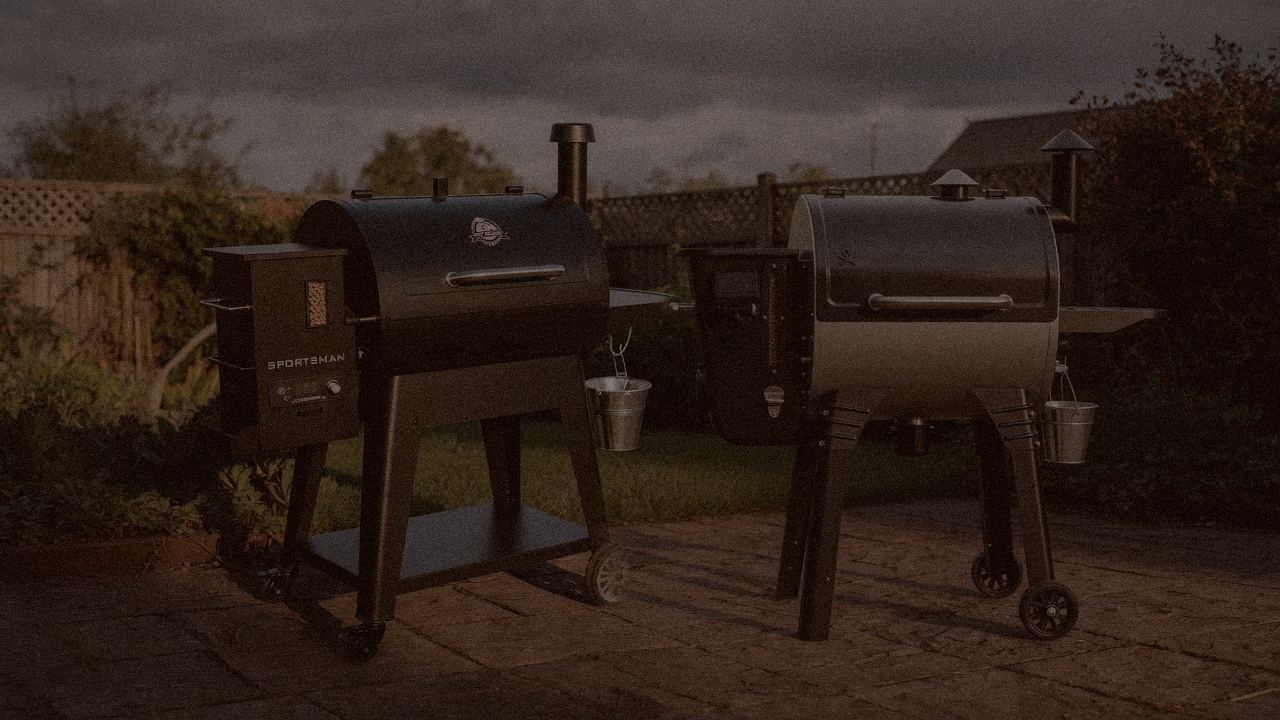
Pulled straight from the problem log we keep on file:
- Woodwind 24: occasional controller failures or app connectivity issues reported by multiple owners on smoking-meat.com forums; older Reddit threads add temp swings, controller glitches, and burn-in feed issues on new units.
- Woodwind 36: the same controller and app complaints as the 24, plus fit and assembly quirks on the larger body. Its higher price also drags its value score to 7, the lowest on Camp Chef's sheet.
- Woodwind Pro: isolated controller flicker or shutdown at high temps; multiple Home Depot and BBQGuys reviews report auger motor failures, probe issues, slow or difficult warranty service, and a long assembly.
- Pit Boss Competition 1250 (discontinued): huge temp swings reported by owners; replaced by the Pro 1150.
Read that list honestly and Camp Chef looks noisier. Part of that is real electronics risk, and it is exactly why Pit Boss's 5-year warranty against Camp Chef's 3 matters more than warranty lines usually do.
Which gives you more grill for the money?
The one verified price in our file makes Pit Boss's case: the Sportsman costs $749 for 849 square inches, about 88 cents per square inch, with a 5-year warranty behind it, roughly $150 per covered year. Camp Chef prices are not in our verified sheet, so I will not fake that half of the math.
| Value metric | Pit Boss | Camp Chef |
|---|---|---|
| Verified price on file | $749 (Sportsman) | - |
| Price per square inch | $0.88 (Sportsman) | - |
| Price per warranty year | ~$150 (Sportsman) | - |
| Warranty | 5 years | 3 years |
| Largest current model | 1,150 sq in (Pro 1150) | 1,236 sq in (Woodwind 36) |
| Largest hopper | 32 lb (Pro 1150) | 22 lb (all Woodwinds) |
Eighty-eight cents per square inch of WiFi-controlled, sear-capable grill with half a decade of coverage is the sentence Camp Chef cannot say at this tier. What you give up for it is the Smoke Number dial, the ash cup, and a notch of finish. Pit Boss also wins the errand: these grills sit on the floor at big-box retail almost everywhere, so you can rap knuckles on one today, while Camp Chef is more of an order-it proposition. If pure floor-price hunting is the mission, the fight gets even uglier in Pit Boss vs Z Grills.
Which one should a first-timer buy?
Pit Boss, in most driveways. A first pellet grill should be cheap enough that a ruined brisket does not sting twice, big enough to grow into, and covered long enough to outlast your learning curve. The Sportsman at $749 checks all three, and the 5-year warranty is training wheels you keep for half a decade. The Woodwind 24 is the better machine to live with, but its advantages, the smoke dial, the ash cup, reward someone who already knows what those levers do. Buy the Pit Boss, cook forty weekends on it, and you will know exactly which Camp Chef feature you were missing, if any. Worth saying plainly: our overall pick across every brand sits outside this matchup entirely, the Weber Searwood XL at the top of our pellet grill rankings, and you can check the current price on it before committing to either side here.
Who should spend the extra on a Camp Chef?
The cook who cleans the pit every third cook and chases smoke flavor on purpose. If you have ever lowered a pit temp just to get more smoke, the Smoke Number dial was built for you, and the Woodwind Pro's chunk-burning Smoke Box with its 9 out of 10 smoke score is the single best reason in this matchup to spend up. Same story if cleanup is what keeps your grill neglected: an 8.5 cleaning score is not an abstraction, it is the difference between emptying a cup and dragging out a vacuum. Go in eyes open on the electronics complaints and the 3-year clock, and keep your receipts. The tinkerer gets more grill from Camp Chef. The set-and-forget cook does not.
Verdict: Pit Boss or Camp Chef?
Camp Chef wins this matchup for the cook who cleans and tinkers. The lever-and-cup ash cleanout, the Smoke Number dial, the Woodwind Pro's Smoke Box, and the stronger fit and finish per dollar at the mid tier are advantages you touch every single cook. The Woodwind 24 is the grill I reach for between these two brands.
Pit Boss is the right buy in two specific cases, and they are common ones. If the mission is the biggest possible grill for the money, an 849-square-inch Sportsman at 88 cents per square inch with a 32-pound-hopper big brother above it is unbeatable here. And if you want to see the grill in a store this afternoon and lean on a 5-year warranty while you learn, Pit Boss earns the driveway. The loser of this comparison is still a grill I would cook on tomorrow.
Is Camp Chef better than Pit Boss?
For smoke control and cleanup, yes. The Woodwinds score 8 to 9 for smoke and 8.5 for cleaning on our sheet, driven by the Smoke Number dial and lever-operated ash cup. Pit Boss answers with lower prices, bigger hoppers, wider retail availability, and a 5-year warranty against Camp Chef's 3.
Do Pit Boss grills have temperature problems?
The only temp complaint in our problem log is huge swings reported on the Competition Series 1250, which Pit Boss discontinued and replaced with the Pro 1150. We have not run current Pit Boss models through our scored temperature protocol yet, so we print no accuracy numbers for them.
Are Camp Chef controllers reliable?
Mostly, with a real asterisk. Owners on smoking-meat.com forums report occasional controller failures and app connectivity dropouts on the Woodwind 24 and 36, and the Woodwind Pro has isolated reports of controller flicker at high temps plus auger motor and probe failures. When they run, they hold temp well: 8 out of 10 for stability on our sheet.
Which lasts longer, Pit Boss or Camp Chef?
Neither brand has a proven longevity edge in our data. Camp Chef's build scores run 7.5 on the standard Woodwinds and 8.5 on the Pro, while Camp Chef's reported failures skew electronic rather than structural. Pit Boss hedges the question with a warranty two years longer, 5 years to Camp Chef's 3.
Is the Camp Chef Woodwind Pro worth the upgrade?
If smoke flavor is why you own a pellet grill, yes. Its Smoke Box burns real wood chunks and earns a 9 out of 10 smoke score, the highest in this matchup, with build at 8.5. Weigh that against owner reports of auger, probe, and warranty-service headaches before buying.